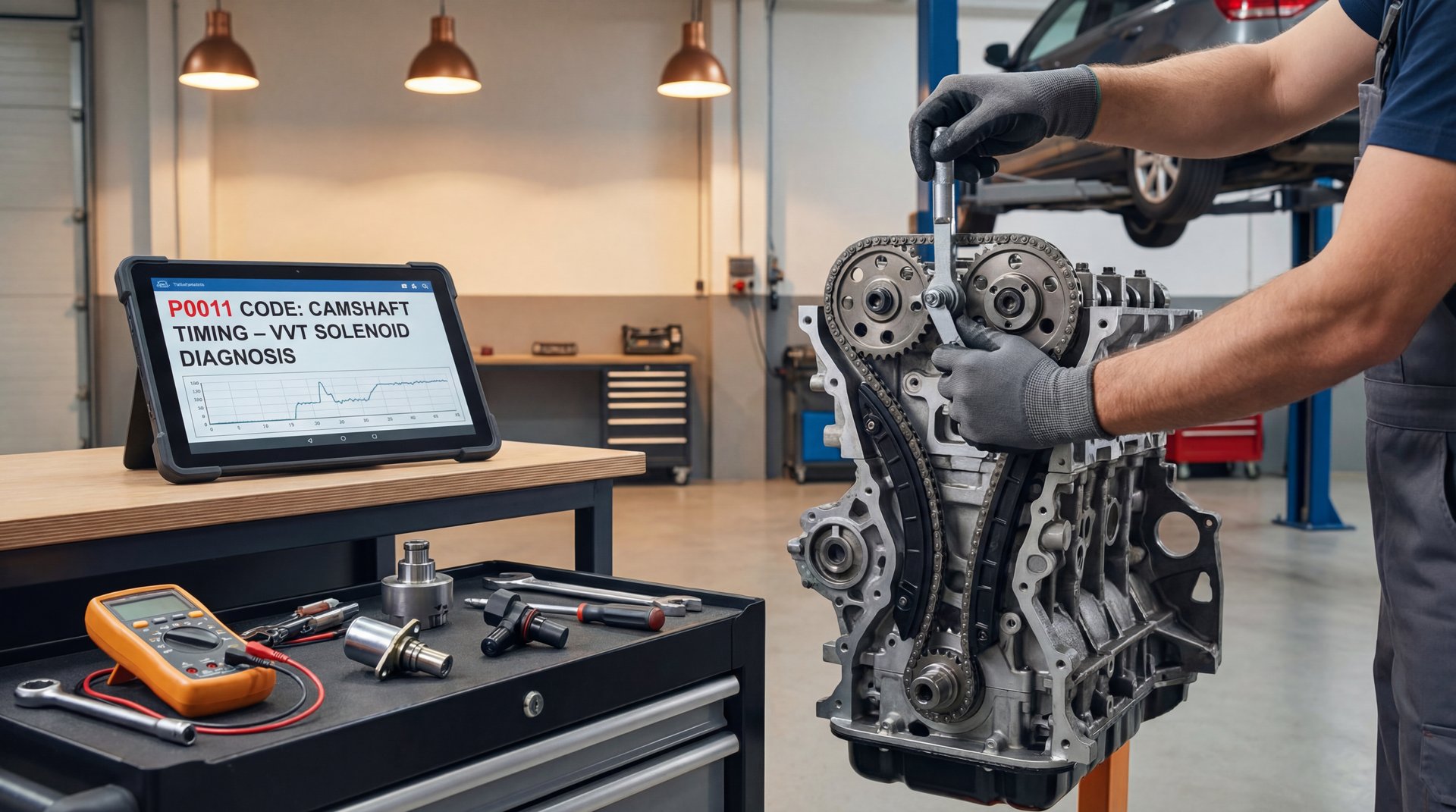
Alright guys, so if you’ve got any of these codes showing up on your scanner – P0011, P0012, P0013, P0014, or any of those camshaft timing codes – this could literally save you hundreds of dollars. I’m talking about one of the most common diagnostic mistakes people make when they see these VVT codes. The thing is, most shops are gonna tell you that you need a new VVT solenoid or maybe even a timing chain, but sometimes it’s as simple as checking your oil level or doing an overdue oil change.
In this article, I’m gonna show you exactly what I showed in the video – how to test these VVT solenoids yourself using a Power Probe, and more importantly, how to avoid wasting money on parts you might not even need. We’re gonna go through the most common causes of these codes, and I’ll walk you through the diagnosis step by step.
Understanding P0011 and Related Codes
So real quick, let me explain what P0011 actually means. Basically, it’s telling you that your “A” camshaft position is timing over-advanced or there’s a system performance issue on Bank 1. In plain English, that usually refers to the intake camshaft on the side of your engine where cylinder 1 is located.
Now, these codes are super common on a bunch of different vehicles. I’m talking about GM Ecotec engines (like in the Chevy Equinox, Malibu, Terrain), Nissan’s QR25 and VQ35 engines, Toyota’s 2AZ-FE engines in Camrys and RAV4s, Hyundai and Kia 2.0 and 2.4 GDI engines, and even VW and Audi 2.0 TFSI engines. If your car has variable valve timing – which pretty much every car made in the last 15 years does – you can get this code.
The thing is, the root causes are usually pretty simple – low or dirty oil, wrong viscosity, clogged VVT oil control screen, a sticking VVT solenoid, or in worse cases, a mechanical timing issue. But here’s what you need to know – that last one is actually pretty rare compared to the simple oil-related issues.
Checking Your Oil First

Alright, so the first thing you’re going to want to do – and I can’t stress this enough – is check your engine oil. I mean, sometimes even if your engine oil is just a little bit low, it’s going to set that code. The VVT system is entirely hydraulic, meaning it uses oil pressure to move the cam phaser. If you don’t have enough oil, or if that oil is too thick or too thin, the system can’t respond fast enough and boom – P0011.
⚠️ Warning
Hot engine oil can exceed 200°F. Let your engine cool down before pulling VVT solenoids or checking oil to avoid serious burns.
Here’s what to check:
- Oil level: Pull your dipstick and make sure you’re between the MIN and MAX marks. Being even half a quart low can trigger P0011 on some engines.
- Oil condition: If that oil looks black and sludgy, or if it’s overdue for a change, that’s probably your problem right there.
- Oil viscosity: Check your oil cap or owner’s manual. Using 20W-50 when your car needs 0W-20 can absolutely cause VVT codes, especially in cold weather. These systems are designed for specific oil thickness.
💰 Money Saver
If your oil change is overdue, all you got to do is change your oil. That light’s not going to return as long as you keep that oil full and change it when you’re supposed to. I’ve seen this fix P0011 probably 60-70% of the time.
For most modern engines with VVT, you’re looking at oil capacities around 4-5 quarts with the filter. For example, a 2010-2015 Chevy Equinox 2.4L takes about 5.0 quarts of 5W-30 synthetic meeting dexos1 spec. A Toyota Camry 2.4L takes about 4.3 quarts of 0W-20 or 5W-20. Don’t guess on this stuff – use what the manufacturer specifies.
After you change the oil, clear the code with your scanner and take it for a drive. If the code doesn’t come back, congratulations – you just saved yourself a few hundred bucks.
Testing the VVT Solenoid
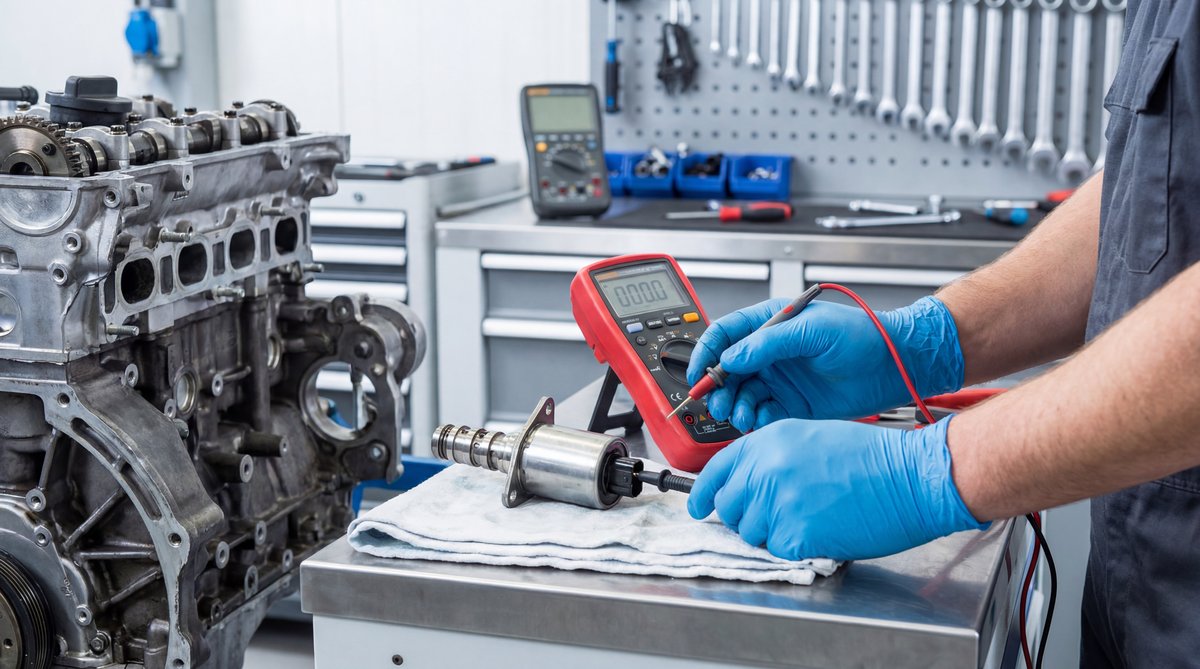
Alright, so today I’m going to be using our Power Probe here. We got a power and ground hooked to our VVT solenoid, and we’re going to apply power and see what happens. As you can see in the video, that plunger is moving – that one’s working too. This is clearly working. So as you can see, all these valves are electronically and mechanically working.
🔧 Tools Needed for Testing
- Power Probe or fused jumper wires
- OBD-II scan tool with live data
- Basic metric socket set (8-19mm)
- Multimeter
- Shop rags and brake cleaner
Here’s how to test your VVT solenoid properly. First, you want to locate it – it’s usually on the front of the cylinder head, often near the timing cover. On most engines it’s held in with one 8mm or 10mm bolt. The typical torque spec for reinstalling these is around 70-90 inch-pounds, so you don’t need to crank down on it.
Before you pull it, disconnect your battery. You don’t want to short anything out or send power back into your ECU – that’s a quick way to fry a computer.
❌ Common Mistake
Never apply 12V to the VVT solenoid while it’s still plugged into the wiring harness. Always remove it completely and test it isolated, or you risk damaging your ECU. Only apply power briefly – we’re talking a quick pulse, not holding it on.
Once you’ve got the solenoid out, look at the screen filter on the inlet side. I’m telling you, this thing gets clogged all the time with oil sludge. If you see debris or the screen looks dark and crusty, clean it with brake cleaner and an old toothbrush. Don’t spray brake cleaner into the electrical connector side though – use electrical contact cleaner there if needed.
Now for the actual test. With your Power Probe or a fused 12V source, briefly touch power to one terminal and ground to the other. You should see and feel the plunger move in and out smoothly. If it’s sticking, not moving at all, or feels gritty, that solenoid is bad. But like I showed in the video, if it moves freely and smoothly, congratulations – hundreds of dollars wasted if you just replaced it without testing.
You can also check resistance with a multimeter. Most VVT solenoids have a coil resistance between 6-14 ohms depending on the vehicle. Check your factory service manual for the exact spec for your engine.
Most Common Causes of P0011
Let me break down what actually causes these codes most of the time, based on what I see in the shop every single day.
Low or Dirty Oil (60-70% of cases)
This is the big one, guys. The VVT system needs clean oil at the right pressure to function. When oil gets old and breaks down, it forms sludge. That sludge clogs the tiny passages in the cam phaser and the VVT solenoid screen. The system can’t move the cam fast enough, and the ECU sees that lag and sets a code.
Many manufacturers specify oil change intervals of 5,000-7,500 miles for vehicles with VVT. If you’re going 10,000+ miles between changes, you’re asking for trouble. The longer you go, the more sludge builds up, and VVT codes become almost guaranteed.
Wrong Oil Viscosity (15-20% of cases)
Using the wrong oil weight is more common than you’d think. These VVT systems are designed for specific oil flow rates. If your engine calls for 0W-20 and you put in 10W-40 because “thicker is better,” you’re gonna have problems. The oil can’t flow through those small passages quick enough, especially when it’s cold out.
🔧 Pro Tip
Always use the exact oil weight your manufacturer specifies. Modern engines with VVT have tighter tolerances than older engines. That 0W-20 or 5W-30 requirement isn’t a suggestion – it’s critical for proper VVT operation.
Clogged VVT Solenoid Screen (10-15% of cases)
Like I mentioned earlier, there’s a little screen filter on the inlet of most VVT solenoids. This catches debris before it gets into the solenoid valve. When you neglect oil changes, this screen gets packed with sludge and the solenoid can’t get enough oil flow. The fix? Pull it out and clean it. Takes 10 minutes and costs nothing.
Failed VVT Solenoid (5-10% of cases)
Sometimes the solenoid itself actually does fail. The internal valve can stick, the coil can short out, or the plunger can seize. But here’s the thing – you need to verify this before throwing parts at it. Test it like I showed you. Don’t just assume it’s bad because you have a code.
A new VVT solenoid typically runs $50-150 depending on the vehicle. Labor at a shop is usually 0.5-1.0 hours, so figure another $50-120 there. But if you can clean your existing one or just change your oil, you’re saving all of that.
| DIY Cost | Shop Cost | You Save |
|---|---|---|
| $25-50 | $200-400 | $150-350 |
Timing Chain Stretch or Jump (Less than 5%)
This is the worst-case scenario, but honestly it’s pretty rare as the first cause of P0011. If your timing chain has stretched or jumped a tooth, the cam timing is going to be mechanically off and no amount of VVT adjustment can compensate. You’ll usually have other symptoms with this though – rough idle, rattling noise on startup, maybe even a check engine light for cam/crank correlation codes like P0016, P0017, or P0018.
If you’ve got those symptoms, or if P0011 keeps coming back even after fresh oil and a verified-good solenoid, then yeah, you might need to look at the timing chain. But don’t jump to that conclusion first.
If you’re dealing with multiple timing-related codes, check out our guide on variable valve timing codes and comprehensive diagnosis for more detailed troubleshooting.
Sometimes it’s as easy as changing your car’s engine oil and clearing the codes. Don’t let a shop talk you into a $1000 timing chain job before you’ve checked the basics.
When to Seek Professional Help
Look, I’m all about DIY and saving money, but there are times when you need to bring your car to a professional. Here’s when you should consider getting help:
- Loud chain rattle or knocking: If your engine is making serious metallic noise, especially on cold starts, shut it off and have it towed. You might have a stretched chain or worn tensioner, and running it could cause catastrophic damage.
- Low oil pressure codes: If you’re getting P0011 along with codes like P0520, P0521, or P0522 (oil pressure sensor codes), or if your oil pressure gauge is reading low, you’ve got a bigger problem. Could be a bad oil pump, worn bearings, or blocked oil passages.
- Metal in the oil: When you change your oil, if you see metallic flakes or glitter in the old oil, that’s not good. That’s internal engine wear and you need a professional diagnosis.
- Timing marks don’t line up: If you’re comfortable enough to check timing marks and they’re off, don’t guess. A jumped timing chain needs professional attention.
- Code keeps returning: You’ve done fresh oil, tested the solenoid, cleaned everything, and P0011 keeps coming back with no other clues – time to let someone with a dealer-level scan tool dig deeper into the live data.
⚠️ Warning
Never crank or start the engine with timing components removed or disconnected. If you’re in over your head with timing chain work, stop and call a pro. A mistimed engine can bend valves and cause thousands in damage in seconds.
A good shop will have access to factory scan tools that can command the VVT system and watch the actual cam timing in degrees in real time. They can see if the ECU is commanding advance but the cam isn’t responding, or if there’s electrical issues you’re missing. Sometimes that diagnostic capability is worth the $100-150 diagnostic fee.
Similar to diagnosing these VVT issues, proper testing is critical. If you’re also troubleshooting other engine codes, our article on testing ignition coils walks through the same methodical approach.
Frequently Asked Questions
What are the most common causes of the P0011 code?
The most common causes are low oil level, dirty or old oil, using the wrong oil viscosity, and clogged VVT solenoid screens. About 60-70% of P0011 codes I see are fixed just by doing an oil change or topping off the oil. The VVT system relies on clean oil at proper pressure, so any oil issue will trigger this code. Less common causes include a failed VVT solenoid, stretched timing chain, or cam phaser failure.
How can I check if my VVT solenoid is clogged?
Remove the VVT solenoid (usually one 8-10mm bolt) and look at the inlet screen filter. If it’s dark, crusty, or has visible debris, it’s clogged. Clean it with brake cleaner and an old toothbrush. While you have it out, also test the solenoid with a Power Probe or jumper wires – apply 12V briefly and the plunger should move freely. If it sticks or doesn’t move, the solenoid itself is bad. Always disconnect the battery before removing the solenoid.
What tools are essential for diagnosing the P0011 code?
You’ll need an OBD-II scan tool at minimum to read the code and clear it. A Power Probe or fused jumper wires are super helpful for testing the VVT solenoid. Basic hand tools – metric sockets 8-19mm, ratchet, and extensions – to remove the solenoid. A multimeter can verify solenoid resistance (typically 6-14 ohms). If you really want to dig deep, a scan tool with live data capability will let you see cam/crank correlation and VVT command vs. actual.
How does dirty oil contribute to the P0011 code?
Dirty oil forms sludge as it breaks down. That sludge clogs the tiny oil passages in the cam phaser and blocks the VVT solenoid screen. The system needs precise oil flow to move the camshaft timing quickly. When those passages are restricted, the cam can’t advance or retard fast enough to meet what the ECU is commanding. The ECU sees that lag and sets P0011. Fresh, clean oil at the correct viscosity flows freely and lets the VVT system respond instantly.
Are there any preventive measures to avoid the P0011 code?
Absolutely. Change your oil on time – don’t push those extended intervals. For engines with VVT, stick to 5,000-7,500 miles maximum. Use the exact oil viscosity your manufacturer specifies, not what you think is better. Use quality oil and filters – cheap stuff tends to break down faster. Keep your oil level between MIN and MAX on the dipstick at all times. If you do these things, you’ll probably never see P0011. I see these codes almost exclusively on neglected vehicles with overdue oil changes.