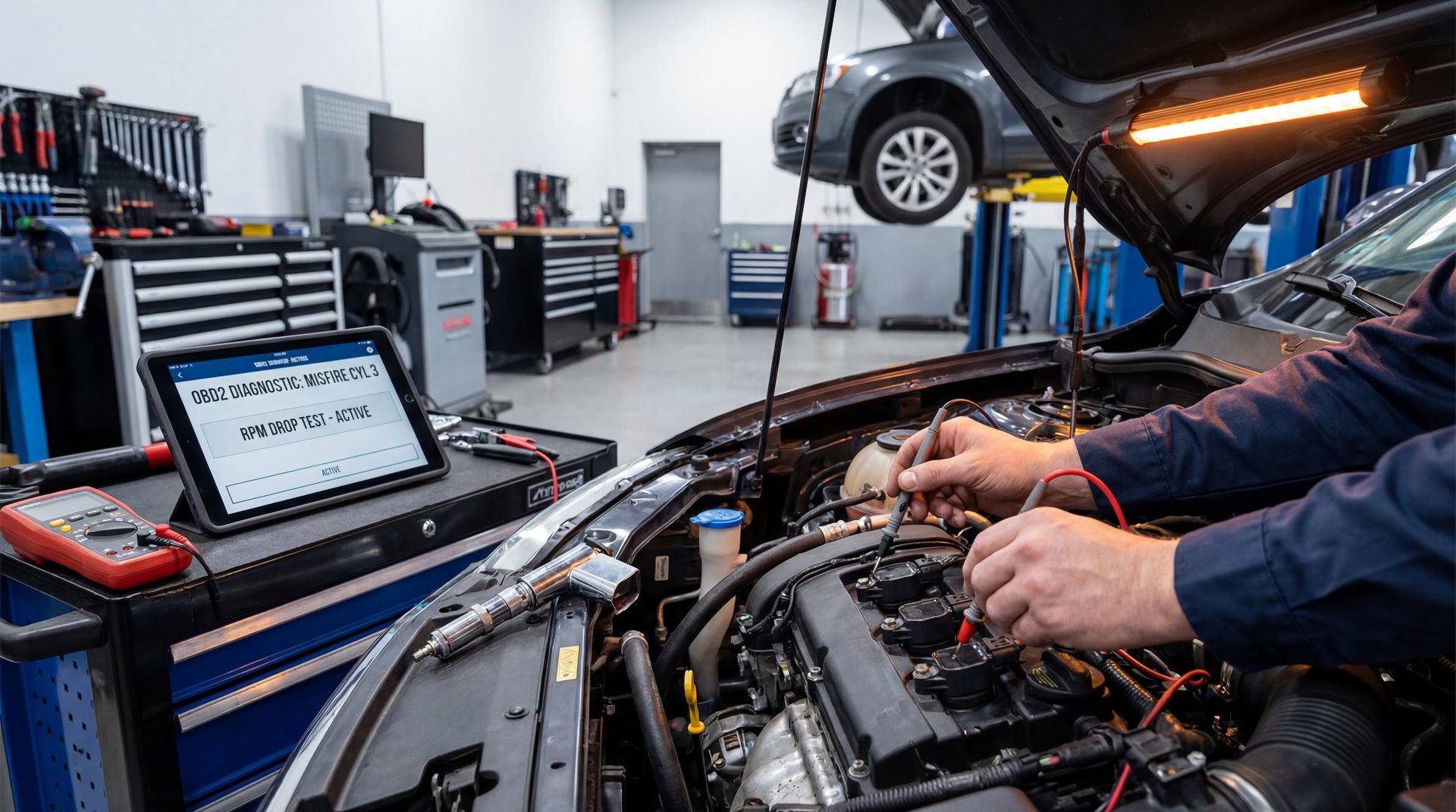
Alright guys, if you’re dealing with an engine misfire, I’m gonna show you the easiest way to test your ignition coil without spending a bunch of money on tools. The thing is, misfires can be a pain to diagnose, but checking your coil is actually super simple when you know this quick trick. You can basically figure out if your coil is good or bad in just a few minutes, and honestly, it might save you from replacing parts you don’t need to.
Spotting a Bad Ignition Coil
Before we jump into testing, you need to know what you’re looking for. A bad ignition coil usually shows up in pretty obvious ways. Your engine’s gonna run rough at idle, you might notice a loss of power when you accelerate, and that check engine light is probably staring at you from the dashboard.
What’s happening is the coil isn’t creating enough voltage to fire the spark plug properly. According to common ignition coil failure patterns, you’ll typically see these symptoms get worse under load or when the engine’s hot. The thing is, if you ignore it too long, you can actually flood your catalytic converter with unburned fuel, and that’s a $1000+ repair you definitely don’t want.
⚠️ Warning
Don’t ignore a misfire. Running your engine with a bad coil can damage your catalytic converter and cost you way more money down the road. Get it checked out as soon as you notice rough running.
The Quick Spark Test Method

Alright, here’s the method I showed you. Real quick, what we’re gonna do is go to your ignition coil and leave the spark plug in the engine. Grab a spare spark plug—you probably have one laying around, or you can pick one up for like five bucks.
Just plug that spare into the coil connector, then touch the threaded part of the plug to a good ground on your engine block. When you crank the engine, you should see a nice blue spark jumping across the gap. If you see that spark, your ignition coil is good. Pretty simple, right?
🔧 Pro Tip
When you’re grounding that spark plug, make sure you’re touching bare metal on the engine block—not a painted surface or plastic cover. You need a solid ground or this test won’t work right.
Now here’s the important part: just don’t zap yourself. That spark is high voltage—we’re talking 10,000 to 20,000 volts on most modern coil-on-plug systems. It’s not gonna kill you, but it’ll definitely wake you up in a hurry.
Using Your OBD2 Scanner
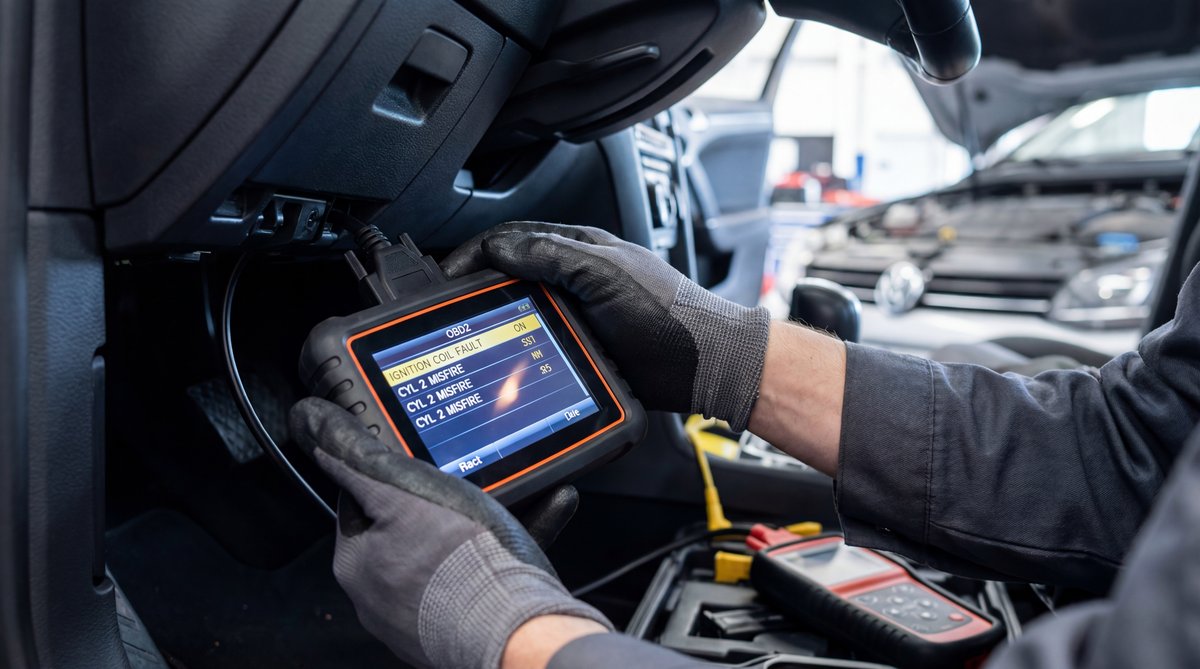
Before you even start pulling coils off, you should scan for codes if you haven’t already. Any basic OBD2 scanner will work—you can grab one for like twenty bucks on Amazon. What you’re looking for are misfire codes.
The codes P0301 through P0308 tell you which specific cylinder is misfiring. So P0301 means cylinder 1, P0302 means cylinder 2, and so on. If you see P0300, that’s a random misfire code, which means it’s jumping around between cylinders. That usually points to something other than just a bad coil—maybe fuel pressure or a vacuum leak.
The thing is, misfires can have multiple causes, so the code gives you a starting point but doesn’t tell you everything. That’s why we do the actual physical tests.
💰 Money Saver
Most auto parts stores will scan your codes for free. If you don’t want to buy a scanner, just swing by AutoZone or Advance Auto and they’ll pull the codes for you in about two minutes.
The RPM Drop Test
Alright guys, here’s another way to test your coils that I use all the time. It’s called the cylinder kill test or RPM drop test. Basically, you get your engine idling, then you unplug one ignition coil at a time. When you unplug a good cylinder, your RPMs should drop by about 100 to 200 RPMs because that cylinder just stopped firing.
If you unplug a coil and nothing happens—the RPMs stay the same—that cylinder wasn’t doing anything anyway. That’s your problem cylinder right there. This test is super handy because you can pinpoint the bad coil without taking anything apart.
🔧 Pro Tip
Use insulated tools when you’re unplugging coils on a running engine. You’re working around live electrical connections and moving parts, so don’t be reaching in there with your bare hands.
Now, one thing to watch out for: if the misfire code doesn’t move after you swap coils, you might have a wiring problem. Sometimes the wiring harness breaks inside the insulation right near the connector where it flexes. You can check this by wiggling the wiring while the engine’s running and seeing if the misfire comes and goes.
Safety Tips You Need to Know
Let me talk about safety real quick because I don’t want anybody getting hurt doing this. First off, wear safety glasses. That spark can jump farther than you think, and you don’t want it anywhere near your eyes. Gloves are a good idea too—insulated ones if you’ve got them.
Disconnect your battery’s negative terminal before you start doing any electrical tests with a multimeter. If you’re just doing the spark test where you’re cranking the engine, obviously you need the battery connected, but be careful where you’re putting your hands.
⚠️ Warning
Never test spark near fuel lines, the fuel rail, or hot exhaust components. Fuel vapors ignite easily, and one spark in the wrong place can start a fire. Keep your test area clear and well-ventilated.
Don’t bypass any fuses or safety systems. And if you’re working on a running engine for the RPM drop test, watch out for the serpentine belt, cooling fan, and other moving parts. Keep loose clothing, jewelry, and long hair away from the engine bay. Just like when you’re checking your engine oil, basic safety goes a long way.
Tools That Make This Easy
The cool thing about this test is you don’t need a ton of expensive tools. A spare spark plug is basically all you need for the method I showed you. But if you want to do a more thorough diagnosis, here’s what I’d recommend having on hand.
🔧 Tools Needed
- Spare spark plug (any old one will work)
- OBD2 scanner ($20-50)
- Multimeter with resistance testing ($15-40)
- Spark tester tool ($10)
- Insulated gloves
- Safety glasses
A spark tester is basically a tool that shows you spark strength more accurately than just eyeballing it. They’re like ten bucks and they protect you from getting zapped. A multimeter lets you check the resistance readings of your coil—the primary winding should read 0.5 to 2 ohms, and the secondary should be around 10,000 to 20,000 ohms. If those numbers are way off, your coil’s bad.
| DIY Cost | Shop Cost | You Save |
|---|---|---|
| $45-125 | $150-400 | $100-300 |
If you need to replace a coil, you can get a decent one from Denso or NGK for about $20 to $40. OEM coils run more like $50 to $100, but they’re gonna last longer. The labor at a shop is usually $100 to $150 per hour, and they’ll charge you an hour or two for diagnosis and replacement. Do it yourself and you’re saving that labor cost—easily a couple hundred bucks.
❌ Common Mistake
Don’t assume it’s the coil without testing. A lot of guys throw parts at a misfire—new coil, new plugs, new wires—when the real problem is a vacuum leak or bad injector. Test first, then replace what’s actually broken.
One more thing: if you’re also due for routine maintenance like an oil change, it’s a good time to check your spark plugs while you’ve got the coils off. Kill two birds with one stone, you know?
Frequently Asked Questions
What are the most common symptoms of a failing ignition coil?
How can I use an OBD2 scanner to diagnose ignition coil issues?
What safety precautions should I take when testing the ignition coil?
How does the RPM drop test help identify which cylinder is misfiring?
What tools are essential for testing an ignition coil at home?