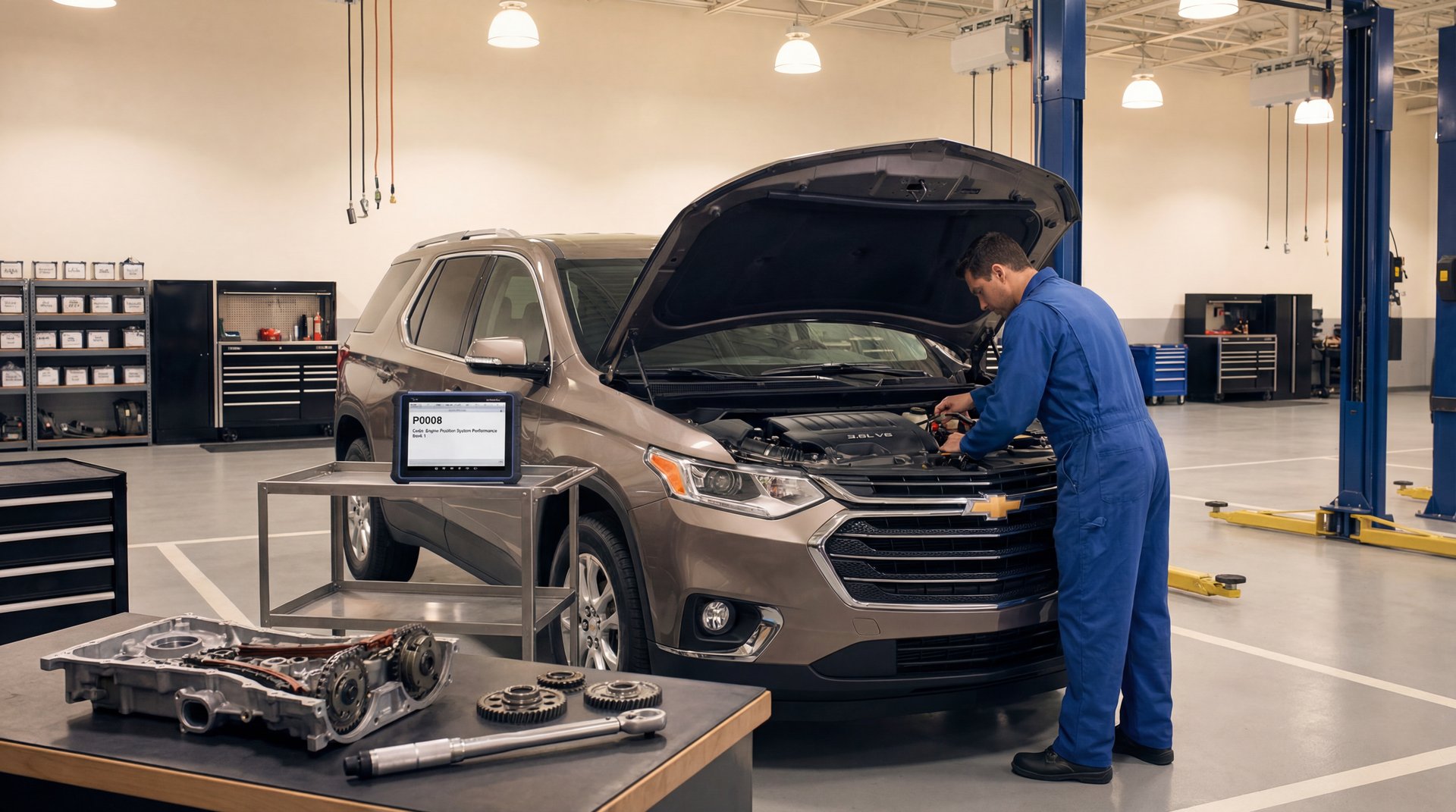
Alright guys, so you’re dealing with a P0008 code on your Chevy Traverse. I know it can be pretty daunting when that check engine light comes on, but we’re gonna break this whole thing down for you. This code’s pointing to a timing issue on bank one, and the thing is, this can actually turn into a pretty expensive repair if you’re not careful. But here’s the good news – there’s actually a warranty extension program that might cover this, and we’re gonna walk through everything you need to know. Whether it’s just a simple solenoid or something more serious like a timing chain, we’re gonna help you figure it out without wasting money on unnecessary repairs.
Understanding the P0008 Code
So basically, this P0008 or P008 code is telling you there’s a problem with the engine’s timing train, specifically on bank one. Now on the Chevy Traverse with the 3.6 liter engine, bank one is actually located on the firewall side – that’s the side furthest back toward the passenger compartment. What’s happening is the PCM (that’s your powertrain control module) is detecting that the crankshaft and camshaft are out of sync with each other.
This code is super common on vehicles owned and operated by General Motors – so we’re talking Chevy, Cadillac, GMC, Buick, even Suzuki. The thing is, these engines all use a variable valve timing system (we call it VVT), and there’s a lot of components that control that timing. When any of those components start wearing out or the timing chain stretches, that’s when you’re gonna see this code pop up.
⚠️ Warning
If you’re getting a P0008 code and you’re hearing any rattling noises from the engine, do not drive the vehicle. When the timing is off, you risk catastrophic engine damage – we’re talking bent valves and damaged pistons. Get it towed if you need to.
The first thing you’re gonna want to do – and I can’t stress this enough – is check your engine oil level. These engines rely on proper oil pressure to operate the variable valve timing solenoids, so if your oil is low or it’s in really bad condition, that can actually cause this code all by itself.
When I scanned the vehicle in the video, I went ahead and checked the oil first. You can see it was actually full, maybe even a little overfull, and it was in pretty good condition. So we could rule that out right away. But if your oil is low or dirty, change it first before you go throwing parts at this thing.
Check Your Warranty Coverage First
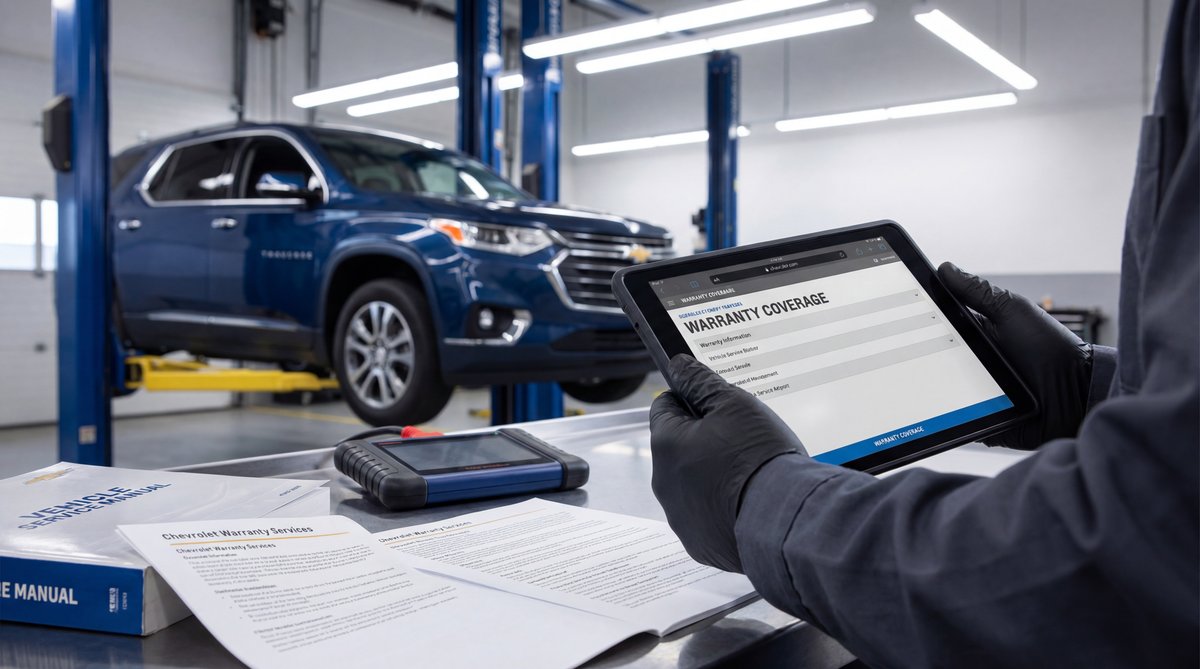
Alright, so here’s where you could potentially save yourself thousands of dollars. GM actually issued a special coverage adjustment for premature timing chain wear on these 3.6 liter engines. This thing covers you for 10 years and 120,000 miles from your original in-service date.
The special coverage applies to vehicles with the 2.8 and 3.6 liter engines – that includes the LT1, LTY, and LLT engine codes. Basically what happened is GM recognized that with the original oil change intervals, the timing chains could wear prematurely and cause the check engine light to come on. So they extended the warranty to cover this issue.
💰 Money Saver
Before you do anything else, call your local GM dealer with your VIN number and ask them to check if your vehicle is eligible for the special coverage adjustment 14217A. This could save you $3,000-$5,500 in repair costs. The dealer has to confirm eligibility using their optical warranty specifications system.
Now the thing is, they’re gonna want to verify your vehicle is eligible before they start doing any repairs. You’ll need to contact your dealer, give them your VIN, and they’ll check it in their Global Warranty Management system. Not every vehicle qualifies – it depends on when it was purchased and what the mileage is – but it’s definitely worth checking before you spend a dime.
Diagnosing the Problem
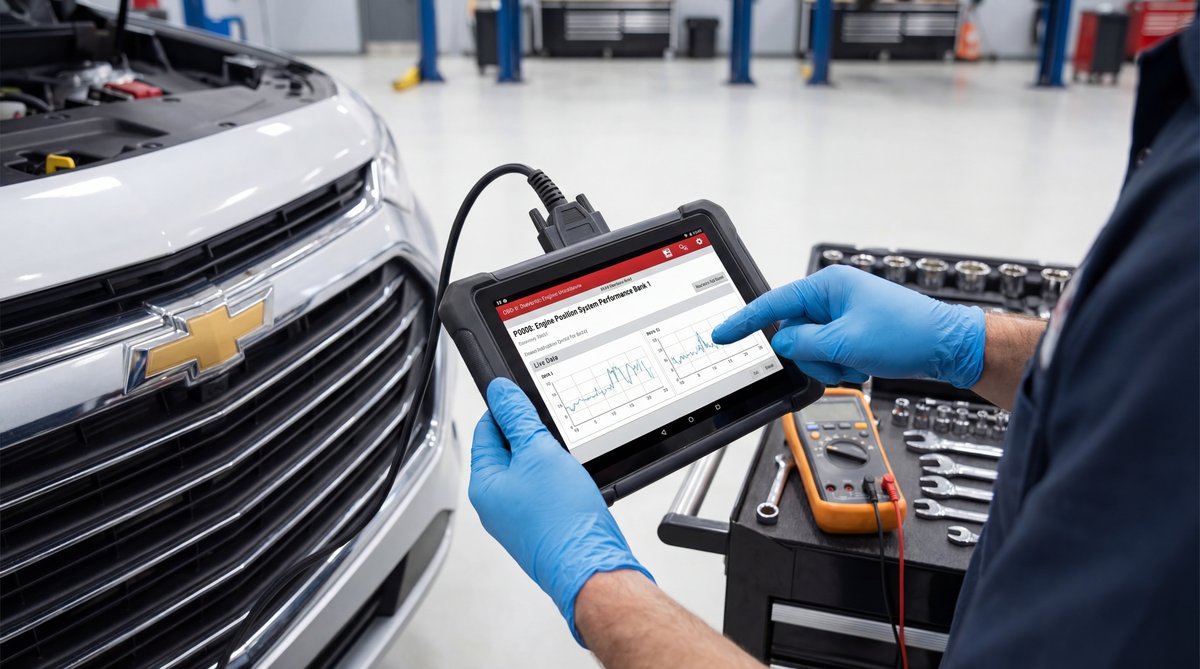
So we’ve got the oil checked, and hopefully you’ve verified whether you have warranty coverage or not. Now let’s talk about actually diagnosing what’s causing this code. There’s a full service bulletin on this – and I pulled it up to show you guys – that covers a bunch of different codes. You might see P0008, P0009, P0016, P0017, P0018, or P0019. All of these are related to timing issues.
This bulletin affects a ton of different vehicles – we’re talking about the Buick Enclave, GMC Acadia, various Cadillacs, even the Camaro. Basically if it’s got one of these 3.6 liter engines, you could run into this problem.
🔧 Pro Tip
If you’re only seeing a P0008 code by itself and it’s just affecting bank one (the firewall side), that usually points to a misaligned timing chain or worn components on that specific bank. When you start seeing multiple codes across both banks, that’s when you might be looking at more widespread issues with the VVT system.
Now the service bulletin I showed you has a lot of technical information – and I gotta warn you, it says right in there that this information is really for professional technicians and not necessarily for do-it-yourselfers. But there’s still valuable info in there about what to check. They want you looking at the tensioners for wear, checking the alignment of the cams, and obviously the engine has to be torn down to check all this stuff.
What I noticed on this particular vehicle when I got under the hood – and you can barely even see the timing cover because it’s way back on the firewall side – but when I started it up in the morning, it was making a little bit of a clattering noise. Not real severe, but it was there. And when you’re sitting in the vehicle, I was feeling just a little bit of a vibration. Also noticed a slightly longer crank time when starting it up.
Some other symptoms you might notice if you’ve got timing chain issues: unstable idle, lack of power, obviously the check engine light is on, and sometimes you’ll even see misfire codes. That’s because when the timing is off, the fuel and air mixture isn’t getting in and out of the motor at the right time, which can cause the engine to misfire.
🔧 Diagnostic Tools Needed
- OBD2 scanner (to read codes and live data)
- Stethoscope (to listen for timing chain noise)
- Flashlight (to inspect oil condition)
- Torque wrench if testing VVT solenoids
Repair Costs and Labor Times
Alright, so let’s talk about what you’re looking at cost-wise if this does end up being a timing chain issue. And I’m gonna be straight with you – this is not a cheap repair. When I looked up the labor time in our service program for a 2010 Chevy Traverse with the 3.6 liter, they’re calling for almost 14 hours on an all-wheel drive model, about 13 hours on a two-wheel drive.
The thing is, on most of these vehicles the engine actually has to be dropped out through the bottom to access everything properly. So we’re not talking about a quick Saturday afternoon job here.
| Cost Item | Amount | Notes |
|---|---|---|
| Labor (Shop) | $2,500-$4,000 | 10-15 hours at $120-150/hr |
| Parts (OEM) | $800-$1,500 | Complete timing kit |
| Fluids & Gaskets | $150-$300 | Oil, coolant, seals |
| Total Shop Cost | $3,300-$5,500 | Without warranty |
So yeah, we’re looking at about $2,500 just in labor, then you’ve got $500-$600 in parts, so you’re at about $3,000 right there. And that’s not including the oil, coolant, and gaskets that you’re gonna need. All said and done, you could be looking at $3,300 to $5,500 at a shop depending on where you go and what parts they use.
This is exactly why checking that warranty coverage first is so important. If you can get this covered under that special coverage adjustment, you’re saving yourself a massive amount of money.
🔧 Pro Tip
Before you jump straight to replacing the timing chain, consider testing or replacing the VVT solenoid first. Variable valve timing solenoids can cause similar codes and they only cost about $40-80 per solenoid. According to OEM parts specifications, the solenoid (part number 55567049) should have a resistance of 5-10 ohms when tested. That’s a much cheaper fix if it solves your problem.
What’s Involved in Timing Chain Replacement
So let’s talk about what’s actually involved if you do need to replace the timing chain. When you look at one of these timing chain kits – and I looked up the AC Delco factory kit which runs about $531 – you’re getting a whole bunch of components.
You’ve got your left bank chain, your right bank chain, and your main chain with the crank sprocket. Then you’ve got all these guides – there’s multiple chain guides throughout the system. You also get the automatic tensioners, which are these little guys that have a pin in them. When you pull the pin, they tension out automatically. And then you’ve got your two cam sprockets along with a couple more chain guides.
What happens over time is these chains stretch – and it doesn’t take much stretch at all to throw the timing off enough to set this code. The guides also start wearing out, and when they wear they can’t keep the chain properly tensioned. That’s when you start getting that rattling noise on startup and eventually the timing gets far enough off that the PCM sets the code.
❌ Common Mistake
One of the biggest mistakes people make is trying to reuse old timing chain components or only replacing part of the system. You need to replace the complete kit – chains, guides, tensioners, and sprockets. Also, never rotate the crankshaft or camshafts independently once you’ve released the tensioners. This can cause the valves to hit the pistons and destroy your engine.
The service bulletin I showed you actually has upgraded parts listed. GM recognized that some of the original components weren’t holding up as well as they should, so they’ve got improved parts available now. When you’re ordering your timing kit, make sure you’re getting the updated components.
Now if you’re thinking about tackling this yourself, I’m gonna be honest with you – this is a pretty advanced repair. You need specialty tools like the camshaft holding tool (J-44242), crankshaft holder, harmonic balancer puller, and TDC alignment pins. You also need an engine hoist or at minimum a good engine support bar because you’re gonna be dropping the subframe.
The torque specs are critical too. Your camshaft sprocket bolts need to be torqued to 18 ft-lbs initially, then you gotta do a 90-degree turn on them. The timing chain tensioner goes to 74 inch-pounds. And that crankshaft balancer bolt – that’s a big one – goes to 240 ft-lbs with an angle torque on top of that. If you don’t have a good torque wrench and the ability to do angle torque, you really shouldn’t be attempting this.
This is substantial amount of work. Typically they drop the engine out through the bottom, and we’re looking at 13-14 hours of labor time. This really isn’t a do-it-yourself job for most people.
After you get everything buttoned back up, the service bulletin says you need to perform an oil life monitoring recalibration. That’s something you’ll need a scan tool for. And before you start the engine, you want to cycle the key on three times without cranking to prime the oil system and get oil pressure to those VVT solenoids.
One more thing – if you’re also dealing with other engine codes, you might want to check out my video on fixing P0172 and P0175 codes since fuel system issues can sometimes cause weird symptoms that look like timing problems.
Frequently Asked Questions
What are the most common causes of the P0008 code in a Chevy Traverse?
How can I check if my Chevy Traverse is still under warranty for this issue?
Can I drive my Traverse with a P0008 code?
What tools do I need to fix a P0008 code myself?
How much does it cost to fix a P0008 code at a shop versus DIY?