
Alright guys, today we’re doing something a little different. Ever wonder what actually happens inside a car fuse when it blows? I mean, you see the fuse is bad, you swap it out, but what’s really going on in there? Well, we’re gonna blow some stuff up and get a close-up look at exactly what happens when an automotive fuse does its job and sacrifices itself to protect your vehicle’s electrical system.
What Happens When a Fuse Blows
So here’s the thing – when I set up to blow this fuse close-up, I had to try a couple times to get a good shot. That’s because it happens fast. Real quick, that metal strip inside just melts and breaks the circuit. Basically, when too much current flows through that little strip of metal, it heats up super fast and just vaporizes.
The fuse is designed to be the weakest link in your electrical circuit. That’s the whole point. When something goes wrong – maybe you’ve got a short in your wiring, or a component draws too much power – that fuse takes one for the team. It blows itself up so your expensive stuff doesn’t get fried.
🔧 Pro Tip
The metal strip inside a fuse is engineered to melt at a specific amperage. That’s why you never, ever want to replace a fuse with a higher amp rating – you’re basically removing your circuit’s protection.
What we’re looking at when we blow these fuses is that critical moment where the metal element can’t handle the load anymore. You’ll see it literally break apart, sometimes with a little spark or flash. In the fuse housing, you’ll often see black soot or discoloration after it blows – that’s from the metal vaporizing.
Types of Automotive Fuses You’ll Find in Your Car
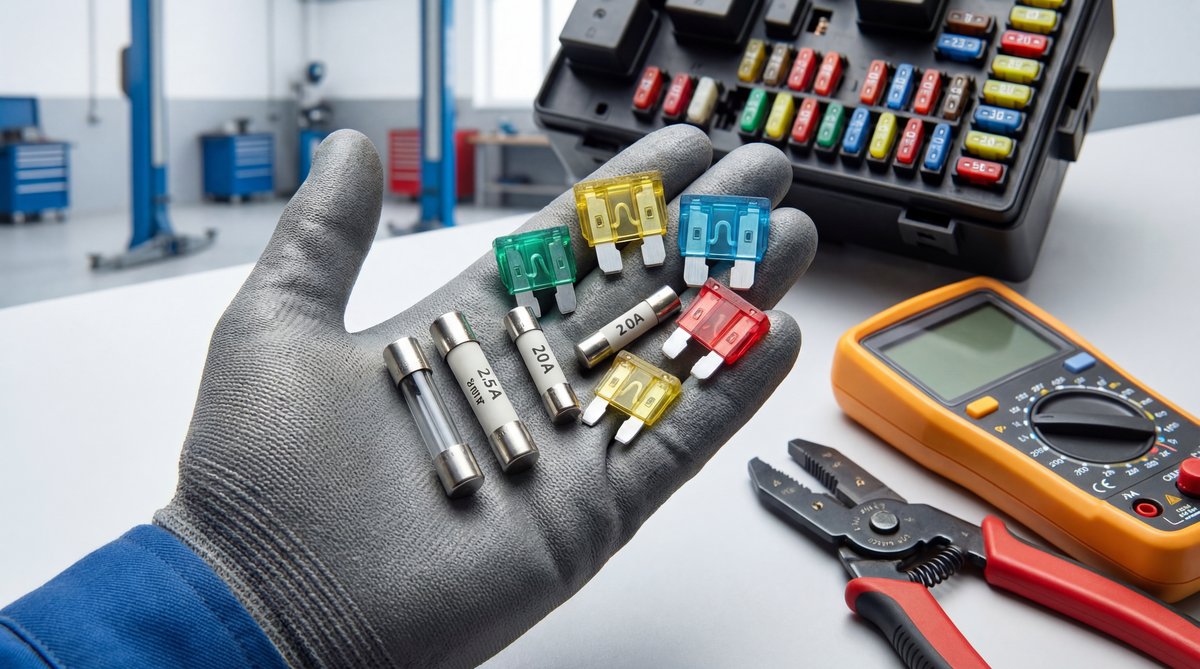
Now, not all fuses are created equal. You’ve got different types depending on what circuit they’re protecting and how much current needs to flow through them. Let’s break down what you’re gonna find in most vehicles.
The most common ones are blade fuses – those colorful rectangular guys you see in your fuse box. They come in three main sizes: mini, standard, and maxi. Mini fuses are typically for lower amp circuits, usually around 5 to 30 amps. Standard blade fuses are what you’ll find most often, and according to manufacturers like ESKA, they’re usually rated around 10 amps at 80V DC with about 19mm length.
Then you’ve got maxi blade fuses for the heavy-duty stuff. These can handle up to 80 amps, and they’re bigger – about 30mm tall. You’ll find these protecting high-draw circuits like your alternator output or electric cooling fans.
For really high-current applications – we’re talking commercial vehicles or heavy equipment – there are high-speed fuses. Something like the Eaton Bussmann FWH-700A can handle 700 amps. Those aren’t what you’re gonna find in your typical car, but it shows you the range of what’s out there.
🔧 Common Fuse Brands Worth Trusting
- Bussmann (by Eaton) – industry standard
- Littelfuse – OEM quality
- ESKA – reliable European brand
- MTA Automotive – good for blade fuses
How to Spot a Blown Fuse
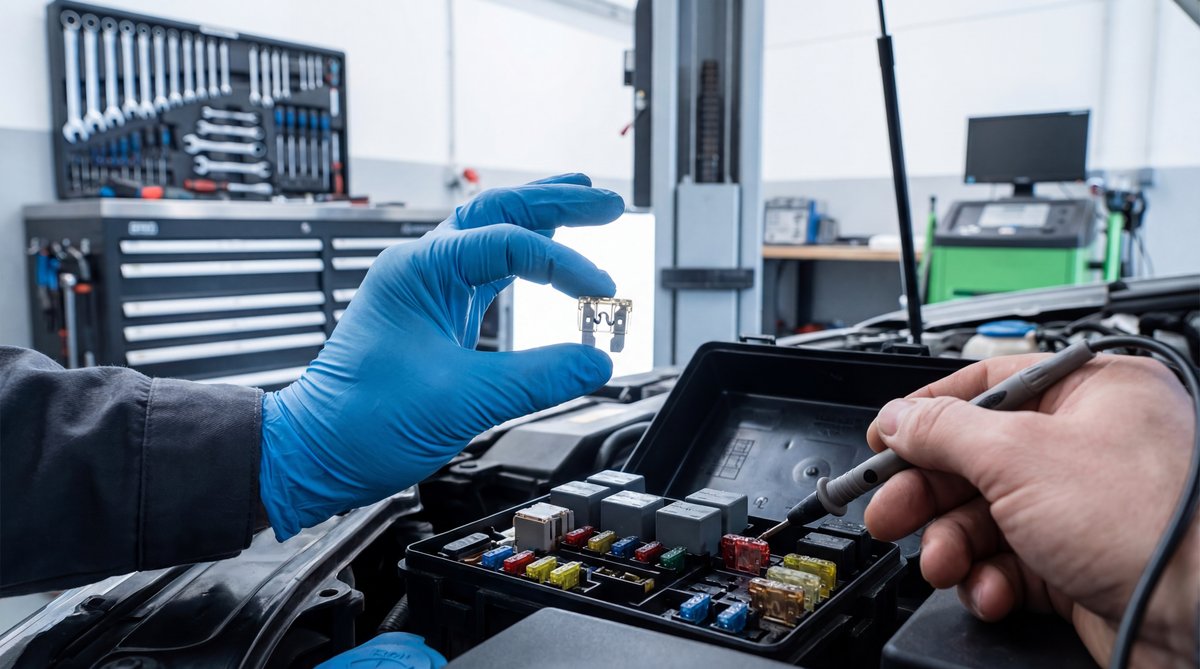
Alright, so you’ve got something electrical that’s not working – radio’s dead, power windows won’t move, whatever. First thing you’re gonna do is check the fuses. But what are we looking for?
The dead giveaway is that metal strip inside the fuse. On a good fuse, you’ll see it’s continuous – it goes all the way across. On a blown fuse, that strip is broken. Sometimes it’s obvious – you’ll see a gap right in the middle. Other times, the plastic housing is all sooty or blackened, and the metal looks melted or discolored.
🔧 Pro Tip
Hold the fuse up to a light source. A good fuse, you’ll see that metal element clearly connected. A blown one? There’s gonna be a gap or it’ll look all corroded and broken up in there.
Now, if you can’t tell just by looking – maybe the plastic is dark or you’re not sure – grab a multimeter. Set it to continuity mode (that’s the little speaker symbol on most meters). Touch the probes to each end of the fuse. A good fuse will beep and show continuity. A blown fuse? Nothing. No beep, no continuity.
The thing is, sometimes a fuse looks okay but it’s actually got a hairline crack in that metal element. That’s why testing with a meter is always your best bet if you’re not 100% sure.
⚠️ Warning
Before you start pulling fuses out, disconnect your battery. I know it seems like overkill for just checking a fuse, but you don’t want to accidentally short something out with your tools or create a spark near the battery.
Replacing a Blown Fuse Safely
Okay, you found the blown fuse. Now what? Well, replacing it is actually pretty straightforward, but there’s a right way and a wrong way to do it.
First thing – and I can’t stress this enough – you need to replace it with the exact same amperage fuse. The color coding on blade fuses makes this easy. A 10-amp fuse is red, a 20-amp is yellow, and so on. Check your owner’s manual or the fuse box diagram (usually on the inside of the fuse box cover) to see what amp rating that circuit needs.
❌ Common Mistake
Never, ever replace a fuse with a higher amp rating thinking it’ll solve your problem. All you’re doing is removing the protection from that circuit. If something’s drawing too much current, you need to fix the underlying issue, not just let more current flow through.
Use a fuse puller or a pair of needle-nose pliers to remove the old fuse. Most fuse boxes come with a little plastic fuse puller tool – it’s usually clipped right inside the fuse box lid. If you don’t have one, needle-nose pliers work fine, just be careful not to short anything out.
Pop the new fuse in. Make sure it’s seated properly – you should feel it click into place. Before you button everything back up, reconnect your battery and test whatever wasn’t working. If it works now, great. If the fuse blows again immediately? You’ve got a bigger problem.
| DIY Fuse Replacement | Shop Cost | You Save |
|---|---|---|
| $0.50-$3 | $50-$120 | $47-$117 |
💰 Money Saver
Pick up an assortment pack of fuses from any auto parts store or online. You can get a 100-piece kit for about $10-15. Way cheaper than buying individual fuses when you need them, and you’ll always have the right one on hand.
Real quick on safety gear – wear safety glasses when you’re working around electrical stuff. I know it seems like overkill for a fuse, but if something shorts or arcs, you don’t want that anywhere near your eyes. And use insulated tools when possible, especially if you’re working on larger fuses or in tight spaces.
Why Fuses Keep Blowing
Alright, this is where it gets frustrating for a lot of people. You replace the fuse, and boom – it blows again right away. Or maybe it lasts a day or two and then blows again. What gives?
Here’s the thing – the fuse isn’t your problem. The fuse is just doing its job. Something in that circuit is drawing too much current, and you need to figure out what. Basically, you’ve got three main culprits: a short circuit, an overloaded circuit, or a failing component.
A short circuit is when electricity finds a path to ground that it’s not supposed to take. This could be damaged insulation on a wire, corrosion creating a bridge between terminals, or a component that’s failed internally. Shorts usually blow fuses immediately – like, the second you put a new one in.
An overloaded circuit is when you’re asking that circuit to do more than it was designed for. Maybe you added aftermarket accessories without upgrading the wiring, or you’re running too many things at once. This might not blow the fuse right away, but over time, the constant high current will heat up that fuse element until it fails.
The fuse isn’t your problem – it’s protecting you from your problem. If it keeps blowing, you need to find what’s causing the overload.
Failing components are tricky. A motor that’s on its way out might draw more current than it should. A corroded connection creates resistance, which means more current draw to do the same work. These can be intermittent – works fine for a while, then suddenly pops the fuse.
To troubleshoot, you need to isolate the problem. Start by disconnecting components one at a time in that circuit. Put in a new fuse with nothing connected – if it blows, you’ve got a wiring issue. If it holds, start reconnecting things until you find what’s causing the problem.
⚠️ Warning
If you’re not comfortable tracing electrical problems, this is when you want to take it to a professional. Electrical issues can be dangerous if you don’t know what you’re doing, and they can also be time-consuming to diagnose. Sometimes paying a shop for an hour of diagnostic time saves you days of frustration.
Check your fuse holder terminals too. Sometimes the problem isn’t the circuit at all – it’s the fuse holder itself. Corrosion or loose terminals can create resistance and heat, which can make a fuse blow even when the circuit is fine. Clean those terminals with some contact cleaner and a small wire brush if they look crusty.
Frequently Asked Questions
What are the most common signs that an automotive fuse has blown?
The most obvious sign is that whatever electrical component the fuse protects stops working completely – no power windows, dead radio, non-functioning lights, whatever. Visually, when you pull the fuse out, you’ll see the metal strip inside is broken or melted. Often there’s black soot or discoloration inside the plastic housing. If you’re not sure just by looking, test it with a multimeter on continuity mode – a blown fuse shows no continuity between the two terminals.
How can I safely replace an automotive fuse?
First, disconnect your battery to prevent any shorts. Locate the blown fuse using your owner’s manual or fuse box diagram. Use a fuse puller tool or needle-nose pliers to remove it. Replace it with an exact same amperage fuse – never go higher. Make sure it’s seated properly, reconnect your battery, and test the circuit. If the new fuse blows immediately, you’ve got an underlying electrical problem that needs fixing. Always wear safety glasses when working with electrical components.
What tools are essential for blowing and testing automotive fuses?
For testing, you need a multimeter – set it to continuity mode to check if a fuse is blown. A fuse puller tool or needle-nose pliers for removing fuses safely. Safety glasses are a must. For more advanced diagnostics, a circuit tester helps you track down electrical problems. And keep an assortment of replacement fuses on hand – you can grab a 100-piece kit for about $10-15, way cheaper than buying them individually when you need them.
Are there any specific safety precautions to take when working with automotive fuses?
Yeah, definitely. Always disconnect the battery before pulling or replacing fuses – prevents shorts and sparks. Wear safety glasses because if something arcs, you don’t want that near your eyes. Never replace a fuse with a higher amperage rating than specified – that’s asking for a fire. Don’t use metal tools that can bridge terminals and create shorts. And never, ever bypass a fuse with wire or foil – that’s insanely dangerous. If fuses keep blowing and you can’t figure out why, take it to a professional rather than risking a fire or damaging your vehicle’s electrical system.
What are the differences between various types of automotive fuses?
The main types are mini, standard, and maxi blade fuses – they’re sized for different current capacities. Mini fuses are smallest, typically 5-30 amps for low-draw circuits. Standard blade fuses (about 19mm long) are most common, usually 10-30 amps for everyday circuits like radio and lights. Maxi blade fuses are the big guys, up to 80 amps, protecting high-draw stuff like alternator output and cooling fans. They’re all color-coded by amperage – red is 10A, yellow is 20A, etc. Some vehicles also use older glass tube fuses or specialty high-current fuses, but blade fuses are standard on most cars from the 1980s to present.