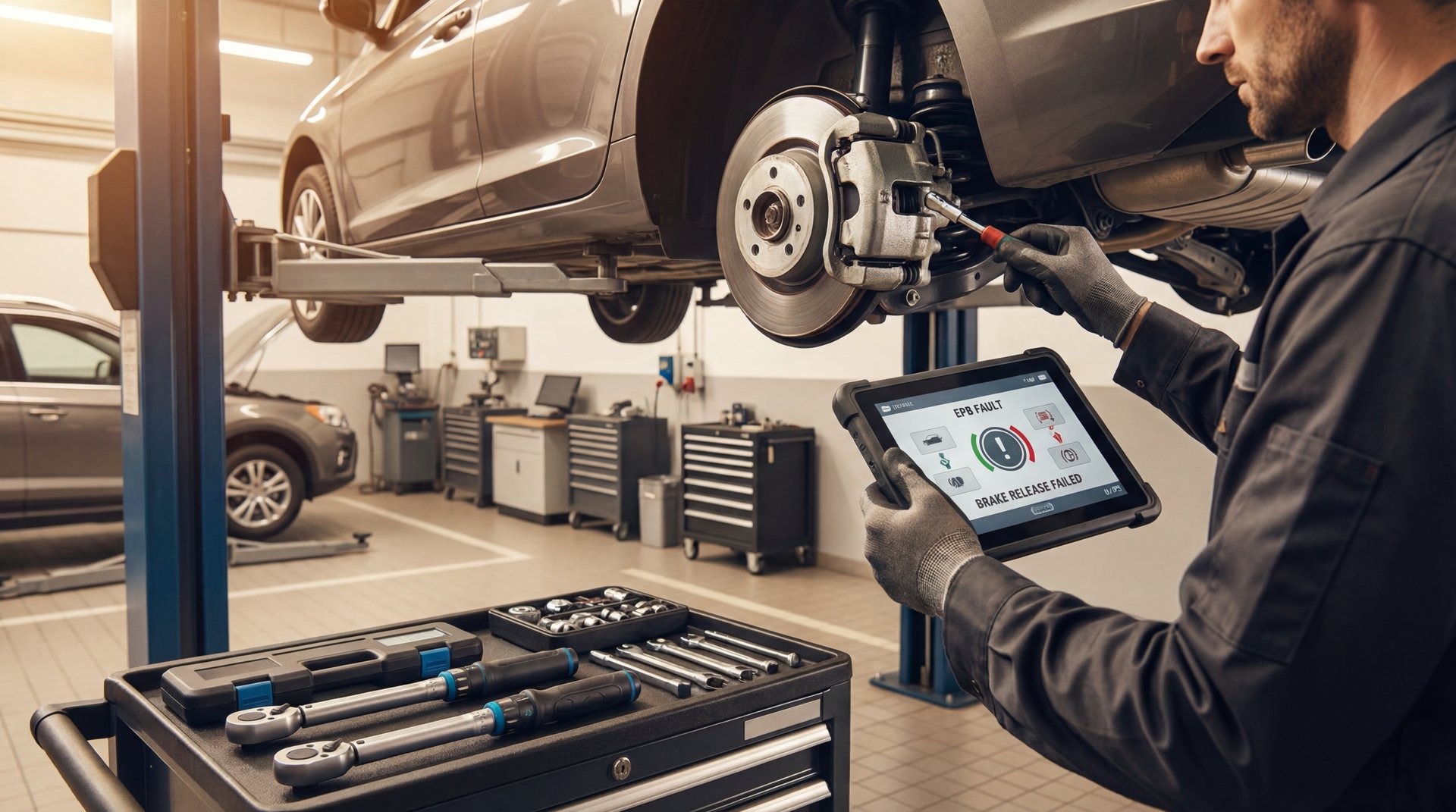
Alright guys, so I had a guest come in with a pretty frustrating problem – their electronic emergency brake would not release. And I mean it was completely stuck, wouldn’t budge at all. You’re not going to believe what we found when we dug into this thing. What looked like a routine electronic parking brake issue turned into something way more interesting when we took a look underneath. Let me walk you through what happened and show you what to look for if you’re dealing with a similar problem.
Diagnosing the Stuck Electronic Parking Brake
So when the guest pulled in, they explained that the electronic emergency brake just wouldn’t release. They’d tried everything they could think of – pressing the button multiple times, turning the ignition on and off, even disconnecting the battery for a few minutes. Nothing worked. The brake was locked solid and the car wasn’t going anywhere.
The thing is, electronic parking brakes are pretty sophisticated systems. They’re not like the old mechanical handbrake where you could just pull harder or wiggle the cable. These systems use electric motors at each rear caliper that basically screw the brake pads into the rotor when you engage the parking brake. When you release it, those motors reverse and back the pads off. Real quick, if the system doesn’t get the right signal or there’s a mechanical problem, you’re stuck.
⚠️ Warning
Never try to force a vehicle with a stuck electronic parking brake to move by revving the engine or dragging it. You can seriously damage the rear brake calipers, rotors, and even the axle components. Always diagnose and properly release the system first.
Common Causes of Electronic Parking Brake Failures
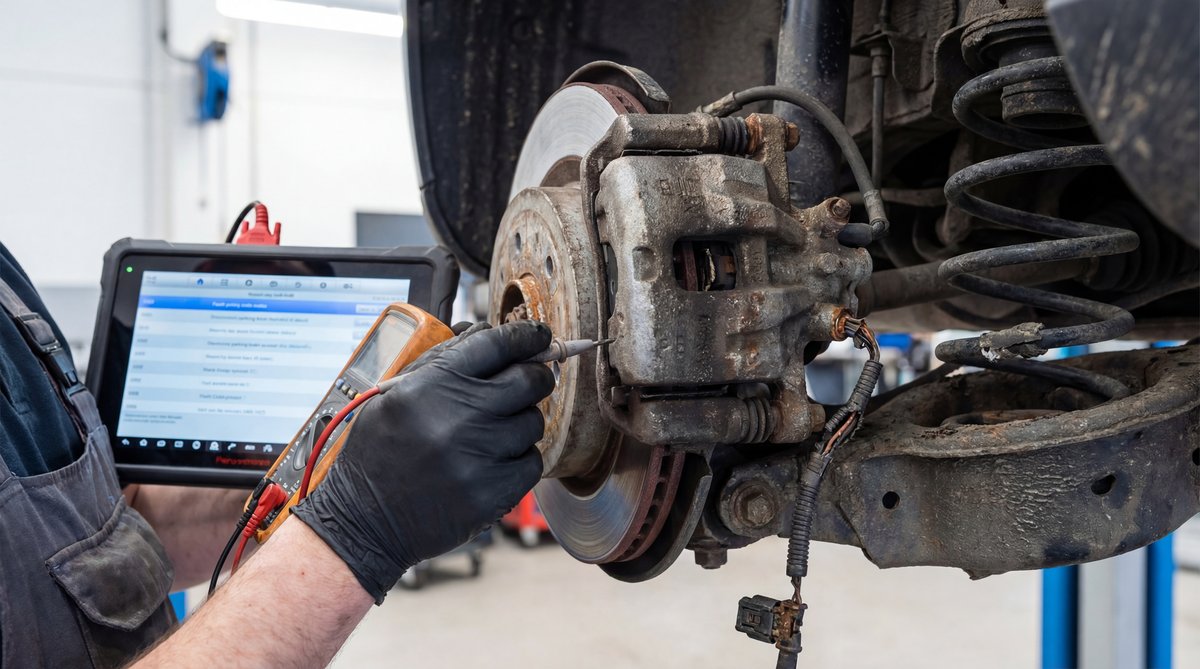
Before we get into what we actually found on this vehicle, let me run through the most common reasons you’ll see an electronic parking brake system refuse to release. I’ve seen all of these over the years, and basically you want to check them in order from simplest to most complex.
First thing – and this is super common – is a weak or dead 12-volt battery. The EPB motors draw significant current when they operate, and if your battery voltage is sitting below about 11.5 volts, the system might not have enough juice to release. I’ve seen plenty of cars where the battery had just enough power to turn on the dash lights but not enough to run the EPB motors. Always check your battery voltage first with a multimeter.
🔧 Basic Diagnostic Tools Needed
- Digital multimeter (for battery voltage checks)
- OBD2 scan tool with ABS/EPB module access
- Jack and rated jack stands
- Wheel chocks
- Basic socket set (metric, up to 18mm)
- Flashlight or work light
Second on the list is a failed EPB actuator motor. These little motors are mounted right on the rear brake calipers, and they take a beating from road salt, moisture, and constant cycling. The internal gears can strip out, or the motor windings can fail. When that happens, you’ll usually hear a clicking or buzzing sound when you try to release the brake, but nothing actually moves. According to automotive parts specialists, EPB actuator failures are particularly common on higher-mileage vehicles or those exposed to harsh winter conditions.
Third possibility – and this one’s tricky – is a seized caliper or parking pawl mechanism. Even though the motor might be working fine and trying to release, if the caliper slides are rusted or the internal mechanism is seized, the brake stays clamped. You need to get the wheel off and inspect the caliper directly for this one.
Fourth on the list is a failed EPB control module or wiring issues. The control module tells the actuators when to engage and release, and if it’s fried or if there’s a short in the wiring harness, you’re dead in the water. This usually throws a fault code in the ABS or body control module that you can read with a scan tool. Similar to issues I’ve covered before like transmission sensor faults, electronic brake systems will store codes that point you in the right direction.
Last thing to check is software interlocks. Some vehicles won’t release the EPB unless certain conditions are met – ignition on, brake pedal pressed, seatbelt fastened, transmission in park. If one of those sensors is giving a bad reading, the system locks you out as a safety feature.
The Inspection and What We Found
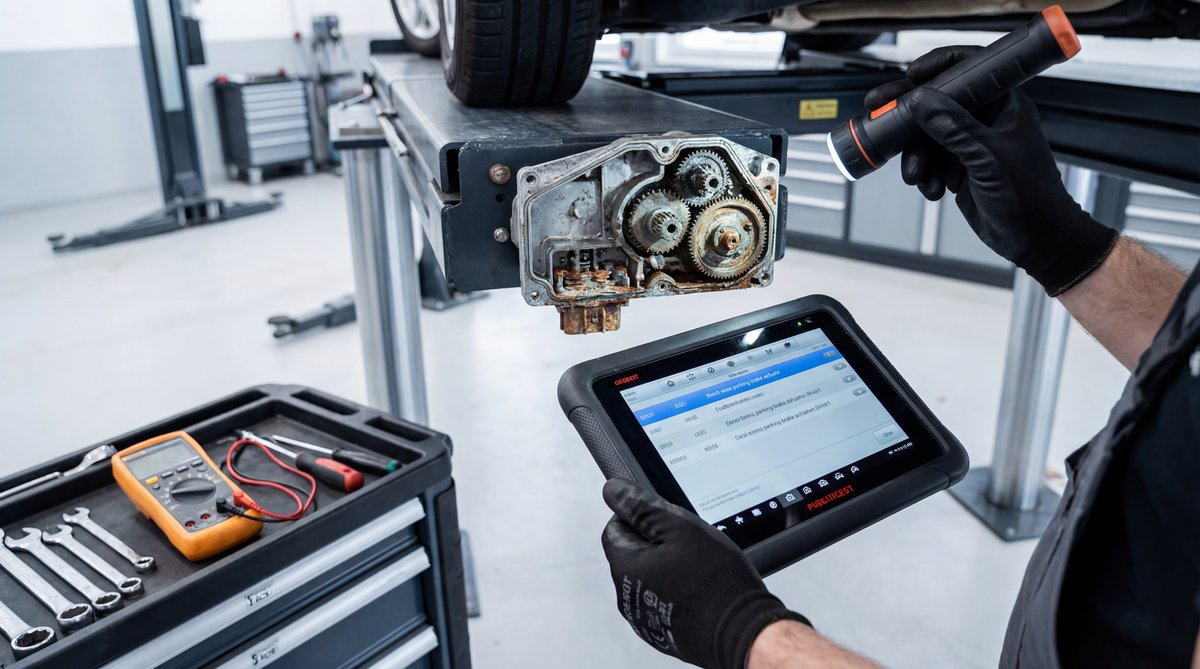
Alright, so back to this particular vehicle. Guest confirmed the brake definitely would not release – we tried the button, checked the fuses, verified the battery was good at 12.6 volts. Everything electrical checked out fine. So I got the car up on the lift and pulled the rear wheels to take a look at the calipers and actuators.
And lo and behold, when I got under there and started looking around the EPB actuator area, look at that – there was an SD card wedged in there. You’re not going to believe this, but that SD card had somehow gotten into the EPB mechanism and was physically blocking the actuator from releasing. I’ve seen a lot of weird stuff stuck in brake components over the years – rocks, sticks, pieces of plastic from wheel well liners – but an SD card? That’s a first for me.
You’re not going to believe what we found on this thing – there was an SD card wedged right in the EPB actuator mechanism, physically preventing it from releasing.
The thing is, once we removed that SD card, the whole system worked perfectly. We cycled the EPB a few times with the scan tool, and it engaged and released smooth as butter. No codes, no weird noises, nothing. The guest had probably driven over it on the road, it kicked up, and got lodged in just the perfect spot to jam the mechanism. One in a million scenario, but it goes to show you that electronic systems can have simple mechanical blockages just like anything else.
🔧 Pro Tip
Always do a thorough visual inspection of the EPB area before you start replacing expensive actuators or control modules. I’ve found everything from road debris to broken splash shields interfering with the mechanism. A $2,000 repair can sometimes be fixed by removing a piece of trash.
Safe Methods to Release a Stuck EPB
Now let me walk you through the proper way to release a stuck electronic parking brake if you’re dealing with this problem. What we’re gonna do is go step-by-step through the safe diagnostic process. Don’t skip steps here – safety is critical when you’re working with brake systems.
First thing, make absolutely sure the vehicle is secure. Chock the front wheels with proper wheel chocks rated for the vehicle weight. Don’t rely on just the transmission park pawl or the stuck brake itself to hold the car – if the brake suddenly releases while you’re working, you don’t want the vehicle rolling. Support the rear of the vehicle on properly rated jack stands if you need to get the wheels off. Never work under a car supported only by a hydraulic jack.
Next, put on your safety glasses and gloves. You’re gonna be working around brake components, and brake dust is nasty stuff you don’t want in your eyes or on your skin. Steel-toe shoes are a good idea too if you’re dropping wheels.
Start your diagnosis by connecting a good quality scan tool that can read ABS and EPB module codes. You need something beyond a basic code reader – tools like Carista for VW/Audi or Autel scanners that have EPB service functions work well. Check for any stored fault codes first. Common codes you’ll see are related to actuator motor faults, position sensor faults, or communication errors.
❌ Common Mistake
People often try to manually retract the EPB actuators by forcing the caliper pistons back with a C-clamp or brake tool. On electronic parking brake systems, this can strip the internal gears or damage the motor. Always use the scan tool service function to command the actuators to retract position first.
If your scan tool has EPB service functions, try commanding the brake to release through the tool. This bypasses the button and sends the release signal directly to the actuators. On a lot of vehicles, this will work even if the dashboard button doesn’t. Watch and listen – you should hear the motors running and see the actuators moving.
If the motors don’t run at all, check your battery voltage again under load. Connect your multimeter and watch the voltage while you command the release. If it drops below 10 volts, your battery can’t supply enough current. Charge it up or jump start with a proper battery pack before continuing.
If the motors run but the brake doesn’t release, now you need to get the wheels off and visually inspect. Look for anything blocking the actuator mechanism – debris, broken components, corrosion buildup. Check that the caliper slides move freely. Sometimes you’ll find the caliper bracket bolts are loose or the slides are seized from lack of lubrication.
| Issue | DIY Cost | Shop Cost |
|---|---|---|
| Debris removal/cleaning | $0-20 | $100-150 |
| Actuator replacement (one side) | $150-250 | $400-800 |
| Control module replacement | $200-400 | $600-1,200 |
| Caliper rebuild | $80-120 | $300-500 |
Tools and Diagnostics You’ll Need
Let me run through the specific tools and equipment you’ll want to have on hand if you’re gonna tackle electronic parking brake diagnostics yourself. Some of this stuff you might already have in your toolbox, but there’s a couple specialty items that make the job way easier.
For basic work, you need a good metric socket set – most EPB systems use metric fasteners in the 10mm to 18mm range. A torque wrench is important for reassembly, especially if you’re removing caliper brackets or actuator mounting bolts. Typical torque specs run around 25-35 Newton-meters for caliper guide pins and 20-40 Newton-meters for actuator mounting bolts, but always verify with your specific vehicle’s service manual.
The scan tool is probably your most important specialty tool. You need one that can access the ABS or EPB control module and command actuator functions. Basic OBD2 code readers won’t cut it – you need something with bi-directional control. For professional work, Autel MaxiIM series or Bosch diagnostic systems work great. For DIY on a budget, tools like Carista work well on VW and Audi products, and there are various options for other makes.
💰 Money Saver
Before buying an expensive scan tool, check if your local auto parts store has a tool loaner program. Many chains loan out advanced diagnostic tools for free with a deposit. You can do your EPB service, return the tool, and get your deposit back – saves you $300-600 on a tool you might only use once.
You’ll also want a good digital multimeter for checking battery voltage and testing EPB motor circuits. Get one that can measure at least 10 amps if you want to check motor current draw. Normal EPB actuator motors draw 3-8 amps during operation depending on the vehicle. If you’re seeing higher current draw or zero current, that tells you something about the motor condition.
For actual repairs, if you need to replace an actuator, stick with OEM parts or quality aftermarket brands like Bosch, ATE, or TRW. The cheap knock-off actuators you see on some websites can have reliability issues. BMW vehicles, for example, commonly use actuators with part numbers like 34436850289 for certain X5/X6 models – always verify the exact part number for your specific vehicle using the VIN.
If you’re also dealing with other electrical gremlins, the diagnostic process is similar to what I showed in the fuel pump diagnosis article – you’re checking for power, ground, and proper signal communication.
🔧 Pro Tip
When you’re replacing EPB actuators or working on the calipers, always replace the brake pads and hardware kit at the same time. You’ve already got everything apart, and fresh pads with new anti-rattle clips and shims will prevent noise issues. Use quality pads like Bosch QuietCast or ACDelco – the cheap ones squeal like crazy with EPB systems.
One more thing – keep a can of brake parts cleaner and some high-temperature synthetic brake grease handy. Even if you’re not replacing parts, cleaning the caliper slides and re-lubing them can solve a ton of EPB release issues. Just make sure you’re using proper brake caliper grease, not regular chassis grease or anti-seize. The wrong lubricant can swell rubber components or bake off at brake temperatures.
Frequently Asked Questions
What are the common causes for an electronic emergency brake to get stuck?
The most common causes are a weak or dead 12-volt battery (the EPB motors need good voltage to operate), a failed actuator motor or stripped internal gears, seized caliper slides or parking pawl mechanism from corrosion, a failed EPB control module or wiring short, and software interlocks preventing release (like ignition position, brake pedal, or seatbelt sensor issues). Always start with checking battery voltage – I’ve seen tons of EPB problems that were just low batteries. Then check for fault codes with a good scan tool before you start throwing parts at it.
How can I safely release an electronic emergency brake if it gets stuck?
First, make sure the vehicle is secure with wheel chocks and never work under a car on just a hydraulic jack. Check your battery voltage – charge it up if it’s below 12 volts. Connect a scan tool that can access EPB functions and try commanding a release through the tool’s service menu. This bypasses the button and directly signals the actuators. If that doesn’t work, you’ll need to remove the rear wheels and inspect for mechanical blockages or seized components. Never try to force the actuators manually with tools – you can strip the gears. If you’re not comfortable with this, have it towed to a shop rather than trying to drive it with the brake stuck.
Are there any specific tools needed to troubleshoot an electronic emergency brake?
Yeah, you need a few specialty tools beyond basic hand tools. Most important is a scan tool that can read ABS/EPB module codes and has bi-directional control to command the actuators – basic code readers won’t work. Tools like Autel scanners, Carista for VW/Audi, or manufacturer-specific tools are what you want. You also need a good digital multimeter to check battery voltage and motor circuits, a torque wrench for reassembly, and proper jack stands and wheel chocks. Some jobs require EPB-specific retraction tools if you’re replacing brake pads. Check if your local parts store has a tool loaner program – can save you hundreds on tools you’ll only use once.
What are the potential safety risks if an electronic emergency brake gets stuck?
The biggest risk is trying to force the vehicle to move with the brake engaged – you can overheat and warp the rear rotors, damage the brake calipers and actuators, and even damage differential or axle components from the stress. I’ve seen rotors turned blue from heat and calipers with cracked housings because someone tried to power through a stuck EPB. There’s also risk if you’re working under the vehicle and the brake suddenly releases without warning – that’s why you always use jack stands and wheel chocks. And if you short out the high-current EPB circuits while troubleshooting, you can blow fuses or damage control modules. Bottom line: don’t drive it stuck, secure the vehicle properly, and disconnect the battery before working on electrical components.
How do I know if my electronic emergency brake needs professional attention?
If you’ve checked the battery voltage, tried releasing with a scan tool, and done a visual inspection but the brake still won’t release or you’re seeing fault codes you don’t understand – that’s when you want a professional. Also, if the actuator motors aren’t running at all or are making grinding noises, or if you see abnormal current draw on your multimeter, those usually indicate component replacement is needed and you’ll want someone with the right tools and experience. Control module replacement especially requires proper programming that usually needs dealer or professional-level equipment. The thing is, electronic brake systems are safety-critical – if you’re not 100% confident in your diagnosis, have it towed to a shop rather than risk it. A tow bill is way cheaper than crashed car or brake failure on the road.