# CVT Transmission Fluid Check: Toyota “No Dip Stick”
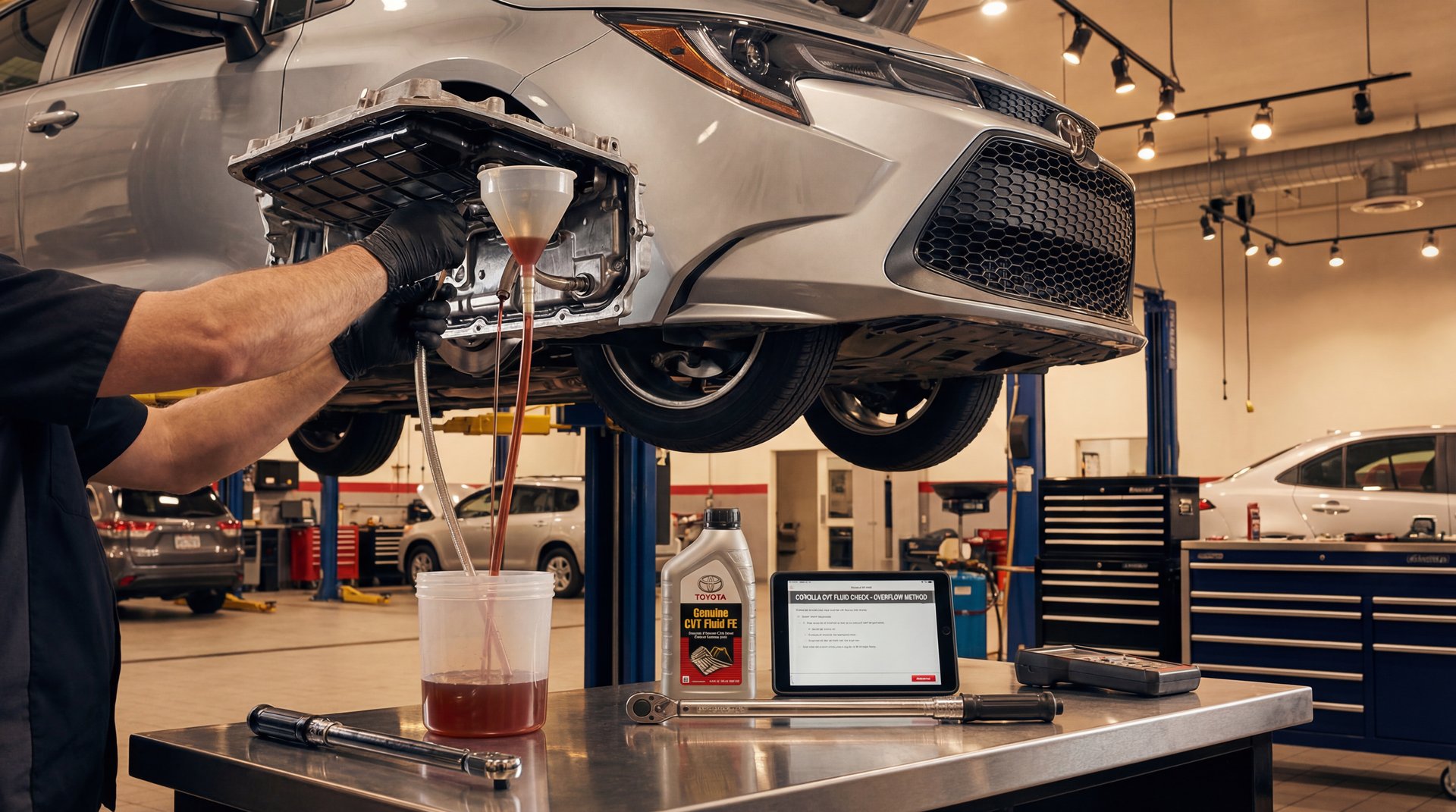
Alright guys, so you’ve got a Toyota Corolla with the CVT transmission and you’re trying to figure out how to check the fluid level, right? Well, here’s the thing – there’s no dipstick on these transmissions. I know, it’s a pain. But in this post, I’m going to walk you through exactly how to drain, refill, and check the fluid level on a CVT transmission when there’s no dipstick to work with. This applies to a lot of Toyota models, not just the Corolla, so if you’ve got a newer Toyota with a CVT, this is gonna help you out. We’re basically gonna fill it until it starts coming out of the overflow hole, and I’ll explain exactly how that works.
Understanding the CVT No-Dipstick System
So the first thing you need to understand is why Toyota designed these CVT transmissions without a dipstick. Basically, they want you to use what’s called an overflow tube method. The transmission has a fill plug on the side and a drain check plug on the bottom of the pan. That drain check plug has a recessed tube that goes up into the pan to the proper fill level – it sits about a half inch to an inch above the pan lip when you measure it.
The way it works is pretty simple once you get it. You fill the transmission through the side fill hole, and when the fluid level reaches the top of that overflow tube inside the pan, it starts coming out the bottom drain check hole. That’s how you know it’s full. You can’t just eyeball it or use a dipstick like the old days.
⚠️ Warning
Never check or fill CVT fluid when it’s cold. You need the transmission at operating temperature – that’s between 176-194°F. If you check it cold, you’ll underfill it by about half a quart, which can cause the CVT belt to slip and lead to expensive damage down the road.
This system is actually used on a bunch of Toyota models. We’re working on a 2015 Corolla in my example, but this same process applies to 2014-2023 Corollas with the 1.8L engine and K313 CVT, some Camrys, the Prius C from 2012-2019, and even some RAV4 Hybrids. The eCVT in the hybrid models is similar but holds a bit more fluid.
Draining the Transmission Pan
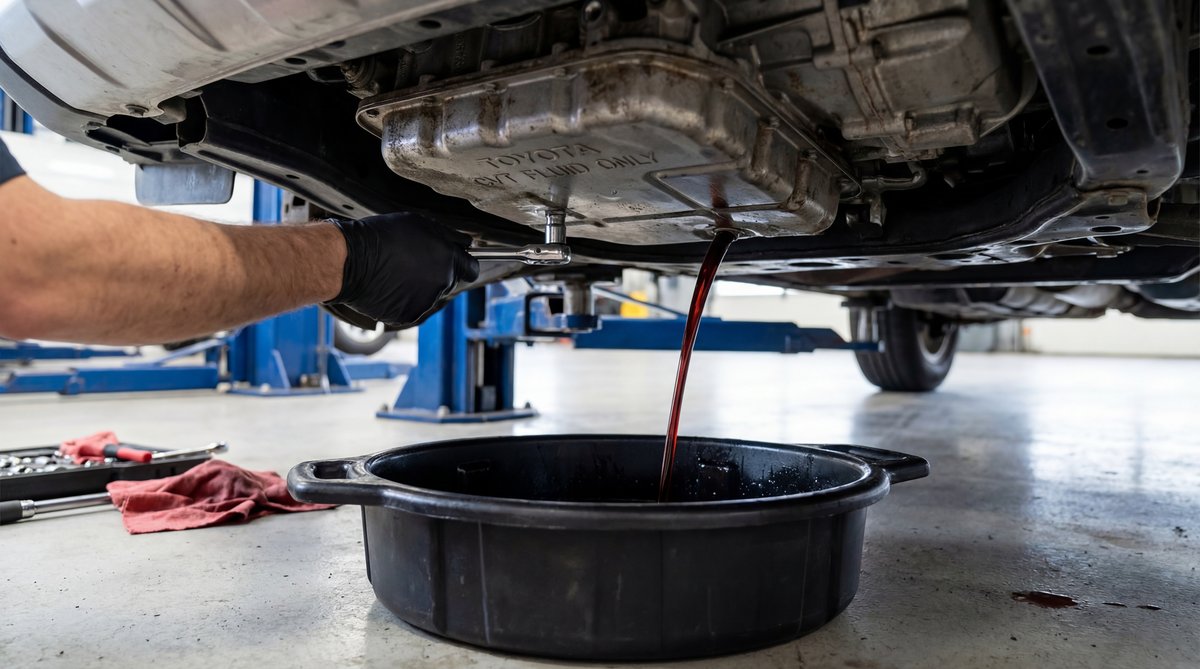
Alright, so the first step is getting the old fluid out. You’re gonna see a drain plug on the bottom of the transmission pan – pretty straightforward. Before you pull that plug though, make sure you’ve got a drain pan underneath that can hold at least 4-5 quarts. The fluid’s gonna come out pretty fast at first.
When you drain a CVT through the pan, you’re gonna get somewhere between 3.7 to 4.2 quarts out, depending on how much is sitting in the cooler lines and torque converter. The total dry fill capacity on these is 7.6 quarts, but you’re not gonna get all that out with just a drain and refill.
🔧 Pro Tip
Measure exactly how much fluid comes out during the drain. That tells you how much to put back in as a starting point. I usually pour the old fluid into empty quart bottles to get an accurate measurement. This saves you from overfilling or underfilling.
Now, if you’re dropping the pan to replace the filter – which I recommend doing if you’re already in there – you’ll need a 10mm socket for the pan bolts. Take them out in a crisscross pattern and be ready for more fluid to spill out when the pan drops. The pan gasket and filter assembly is all one piece on these Toyotas, which makes it easier. The OEM part number is 35330-12050 for the filter kit.
When you reinstall the pan, torque those bolts to 7 ft-lbs in a crisscross pattern. Don’t just crank them down – the pan is aluminum and you can warp it or strip the threads real easy. The drain plug itself gets torqued to 29 ft-lbs when you’re done.
Locating the Fill Plug and Getting Access
Here’s where it gets a little tricky if you’ve never done it before. The fill plug is on the side of the transmission, and you need to get at it from underneath with the driver’s side wheel off. We’re gonna pull that wheel off and remove the plastic inner fender piece to access the side of the transmission.
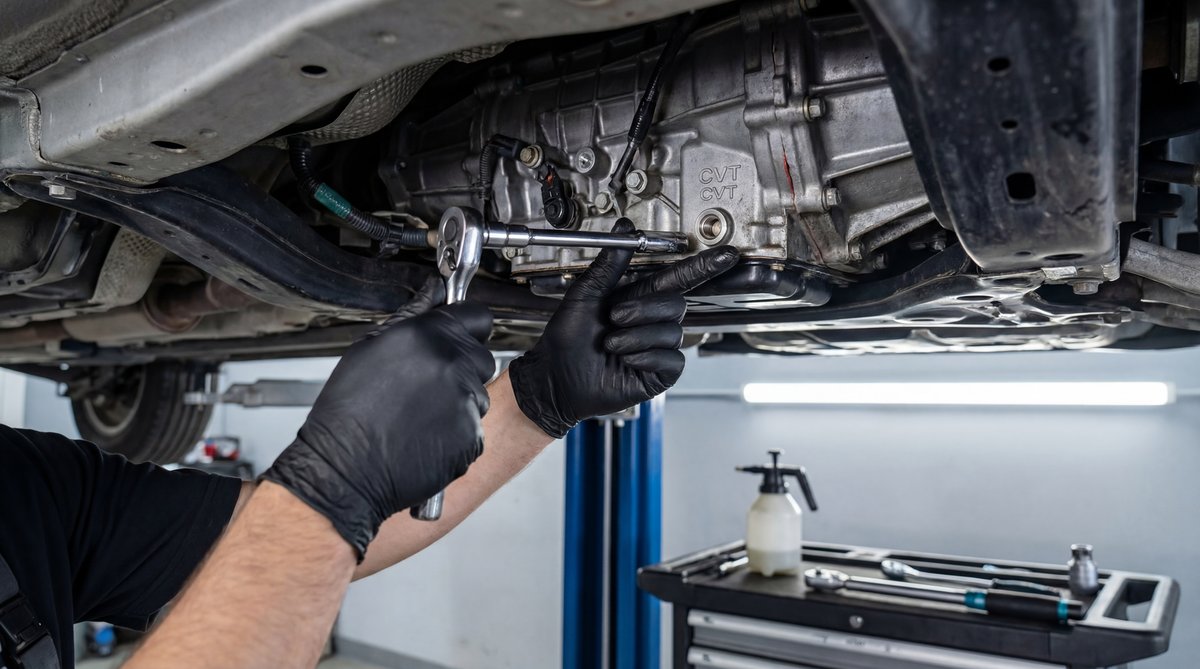
You’re looking for a plug that takes a 15/16 wrench or a 24mm socket to break it loose. That’s your fill hole right there. Now before you start pulling plugs, make sure you can get that fill plug loose first. The last thing you want is to drain all your fluid and then find out you can’t get the fill plug out to put new fluid back in. Always check that you can remove the fill plug before you drain anything.
🔧 Tools Needed
15/16-inch wrench or 24mm socket for fill plug
10mm socket for pan bolts
6mm Allen socket for drain check plug
T40 Torx for fender liner screws
Fluid pump or long funnel with hose
Torque wrench (inch-pound range)
3-ton jack stands and wheel chocks
OBD-II scanner for temp monitoring
Drain pan (5+ quart capacity)
Nitrile gloves and eye protection
The inner fender liner comes off with some T40 Torx screws. Just pull that plastic piece back and you’ll have clear access to the fill plug. Real quick – make sure you’ve got the car safely supported on jack stands before you get under there. A 3-ton minimum jack stand is what you want for this. Put wheel chocks behind the rear wheels too.
Filling and Checking the Fluid Level
Alright, so now we’re ready to actually fill this thing. First, let’s talk about what fluid you need. On this 2015 Toyota Corolla CVT transmission, it takes Toyota Genuine CVT Fluid FE. The part number is 00289-ATF1Q, or you can get the quart bottles as part number 08886-02506. You need to stick with the OEM fluid on these – this is not the time to cheap out or substitute with generic CVT fluid.
❌ Common Mistake
Don’t use regular ATF or generic CVT fluid in these Toyota CVTs. I’ve seen guys use Nissan NS-2 fluid or whatever’s on sale at the parts store, and within 5,000 miles they’re getting shudder and slipping. The CVT belt needs the specific friction characteristics of the Toyota fluid. Just use the right stuff.
Before you start filling, make sure that drain check plug on the bottom of the pan is out. That’s the one with the 6mm Allen head. Leave that out during the entire fill process. You’re gonna stick a funnel in the side fill hole and start pouring fluid in. I use a fluid pump for this because the fill hole is at an awkward angle, but you can use a long funnel with a hose attached if that’s what you’ve got.
Start filling with the transmission off. You’re gonna add about three quarts before anything starts happening. Keep pouring until you see fluid start to drip out of that bottom drain check hole. Once it starts coming out, stop and start the vehicle.
Here’s the important part – you need to bring the transmission up to operating temperature. According to transmission service guidelines, that means getting the fluid between 176-194°F. The best way to check this is with an OBD-II scanner that can read the ATF temperature sensor. You need to drive the car for about 10-15 minutes on the highway to get it properly warmed up.
176-194°F
PROPER CHECK TEMP
CVT fluid must be this hot for accurate level check
Once it’s at temperature, bring it back and let it idle in park with that drain check plug still out. Cycle through all the gears – P, R, N, D – about three to five times while it’s idling. This circulates the fluid through the whole system. Then put it back in park and watch that drain check hole. If fluid is steadily dripping out, you’re at the right level. If nothing’s coming out, add fluid in 0.1 or 0.2 quart increments until it starts dripping.
When you’ve got a steady drip coming out and the transmission is at operating temperature, you’re good. Install that 6mm Allen drain check plug and torque it to 29 ft-lbs. Then reinstall the side fill plug and torque that to 29 ft-lbs as well.
Tools and Parts You’ll Need
Let me break down what this whole job is gonna cost you parts-wise. The Toyota Genuine CVT Fluid FE runs about $25-30 per quart at the dealer, and you need about 4 quarts for a drain and refill. That’s $100-120 just for the fluid. If you’re doing the filter and gasket too, that kit runs around $60-80 for the OEM stuff, or you can find budget versions for $40-60.
DIY Cost
Shop Cost
You Save
$140-$240
$500-$950
$360-$710
You can get the fluid from the Toyota dealer, RockAuto.com, or Amazon if you’re looking for OEM kits. I’d avoid eBay for the actual fluid because there are counterfeits out there. Advance Auto Parts usually has the OEM fluid in stock too.
If you don’t already have the specialty tools, you’re looking at maybe another $50-100 for a fluid pump and the right sockets. But the thing is, you’ll use these tools again. CVT transmission service should be done every 30,000 miles or 3 years, even though Toyota says 100,000 miles in the manual. The fluid breaks down way faster than that, especially if you do a lot of city driving or live in a hot climate.
💰 Money Saver
If you do this service yourself every 30,000 miles, you’re saving $360-710 each time compared to shop rates. Over the life of the vehicle, that’s thousands of dollars in your pocket instead of the dealer’s. Plus, you know it’s done right with the correct fluid.
The time investment is about 2-3 hours for the whole job if you’re taking your time and doing the filter too. That breaks down to about 30 minutes for the drain, an hour for the pan and filter work, and another hour for filling and checking the level properly. If you’re just doing a quick drain and refill without dropping the pan, you can knock it out in under 2 hours.
Common Mistakes to Avoid
Let me tell you about the mistakes I see people make with these CVT services, because they can cost you big time. The number one mistake is checking or filling the fluid when it’s cold. If you do that, you’re gonna underfill it by about half a quart, and that leads to belt slip. The CVT needs that fluid for hydraulic pressure and lubrication, and if it’s low, you’re gonna get premature wear.
Another big one is using the wrong fluid. Some guys think all CVT fluid is the same, or they try to save money with generic stuff. Don’t do it. I’ve seen transmissions start shuddering within 1,000 miles of using the wrong fluid. The Toyota CVT Fluid FE has specific friction modifiers for the belt and pulleys, and generic fluids don’t have the same properties.
The CVT belt needs the specific friction characteristics of the Toyota fluid. Using generic ATF or wrong CVT fluid will cause belt slippage within 5,000 miles.
Boulevard Mechanic
People also mess up by over-torquing the plugs. The transmission case is aluminum, and if you crank down on that fill plug or drain plug too hard, you’ll strip the threads. Then you’re looking at a helicoil repair or worse. Just use a torque wrench and stick to 29 ft-lbs – that’s plenty.
Here’s another thing – if you’re dropping the pan, check that magnet in the bottom. There should be some fine metallic dust on there, but if you see chunks or a lot of material, that’s a sign of internal wear. At that point, you might want to have a transmission shop take a look before you just button it back up. If you’re seeing metal debris and the fluid is really dark or burnt smelling, a simple drain and refill might not fix your problems.
If you run into issues after the service – like the transmission is slipping or you’re getting codes – don’t panic right away. First, recheck the fluid level when it’s hot. A lot of times the issue is just being slightly underfilled. If you added 4 quarts but nothing came out the overflow, add another 0.2 quarts and check again. If you go through 5 quarts and still nothing’s coming out, you might have a clog in the cooler or a pump issue. That’s when you scan for codes – P0711 is the fluid temp sensor, P0776 and P0841 are pressure control issues.
There’s also a relationship between transmission issues and other systems. If you’re having trouble with transmission codes, you might want to check out issues with transmission range sensors which can cause similar symptoms. The sensors tell the computer what gear you’re in, and if that’s acting up, you can get all kinds of weird behavior.
Frequently Asked Questions
What are the signs that the CVT transmission fluid needs to be checked?
The main signs are delayed engagement when you shift into drive or reverse, a whining or humming noise at 25-40 mph, hesitation when accelerating, or a burnt smell coming from under the car. You might also notice the transmission slipping or the RPMs jumping around without corresponding acceleration. If the fluid hasn’t been changed in over 50,000 miles, it’s time to check it regardless of symptoms. Dark or burnt-smelling fluid when you pull the drain plug is another dead giveaway.
How often should the CVT transmission fluid be checked in a Toyota Corolla?
I recommend servicing the CVT fluid every 30,000 miles or 3 years, whichever comes first. Toyota says 100,000 miles in the manual, but that’s really pushing it. The fluid breaks down from heat cycles, especially if you do a lot of stop-and-go driving or towing. According to CVT maintenance guidelines, regular service at 30k intervals can extend the life of your transmission by years compared to waiting for the factory interval.
What are the consequences of not checking the CVT transmission fluid regularly?
If you neglect the CVT fluid, you’re looking at belt slip, which causes premature wear on the pulleys and belt. Once that starts, it’s a downward spiral – more wear creates more metal particles in the fluid, which causes more wear. Eventually, you’ll need a complete transmission replacement, which runs $3,000-5,000 for these Corollas. Low fluid can also cause overheating, which damages the valve body and solenoids. Basically, skipping a $150 fluid service can cost you thousands down the road.
Are there any specific tools needed to check the CVT transmission fluid level?
Yeah, you need a few specialty tools. The main one is a 15/16-inch wrench or 24mm socket for the fill plug – that’s not something most people have lying around. You also need a 6mm Allen socket for the drain check plug, a fluid pump or long funnel setup to fill through the side hole, and really you should have an OBD-II scanner that can read transmission temperature. The temp has to be between 176-194°F for an accurate check, and you can’t know that without a scanner. You also need basic stuff like jack stands, a drain pan, and a torque wrench.
How does the CVT transmission fluid check differ from traditional automatic transmissions?
Traditional automatics usually have a dipstick, so you can check the level in about 30 seconds with the engine running and warmed up. With CVTs that have no dipstick, you need to pull both the fill plug and drain check plug, get the transmission up to precise operating temperature, and wait for fluid to overflow. The whole process takes 2-3 hours versus 2 minutes. Also, CVT fluid is way more specific to the vehicle – you can’t just use any ATF like you could on older transmissions. The overflow method is more accurate once you do it right, but it’s definitely more involved than checking a dipstick.
Can I use a different CVT fluid besides Toyota Genuine CVT FE?
No, and I’m gonna be real direct about this – only use Toyota CVT Fluid FE in these transmissions. Some people try to use Nissan NS-2 or generic CVT fluid to save money, and it causes problems within 5,000 miles. The Toyota fluid has specific friction modifiers for the belt and pulley system, and other fluids don’t have the same formulation. You might save $30 on fluid but end up spending $4,000 on a transmission. Just use the right stuff.
What if no fluid comes out the overflow hole after I’ve added several quarts?
First, make sure the transmission is actually at operating temperature – use an OBD scanner to verify 176-194°F. Then cycle through all the gears five times while idling to circulate the fluid. If still nothing comes out after you’ve added 4.5-5 quarts, you might have a clog in the cooler lines or an issue with the pump. At that point, scan for codes – you’re looking for things like P0711 for the temp sensor. If you’re sure the temp is right and you’ve added way more than 4 quarts, stop and take it to a shop because something else is going on.
Will doing this service myself void my Toyota warranty?
No, as long as you use OEM fluid and parts and keep records of what you did. The Magnuson-Moss Warranty Act says manufacturers can’t void your warranty just because you did your own maintenance. Just keep your receipts for the Toyota CVT fluid and filter kit, write down the date and mileage, and you’re covered. Toyota actually approves of owner service as long as it’s done correctly with the right materials.
That’s gonna do it for this one. The no-dipstick CVT system seems complicated at first, but once you understand the overflow method, it’s actually pretty straightforward. The key things to remember are: use only Toyota Genuine CVT Fluid FE, check it at proper operating temperature, and don’t skip the pan drop and filter if you’re doing a full service. This is one of those jobs that saves you serious money doing it yourself – we’re talking $500-700 per service versus doing it at the dealer. Thanks for reading, and if you found this helpful, check out some of the other transmission articles on the site.
Flat Rate Mechanic
CVT Transmission Fluid Check: Toyota "No Dip Stick"