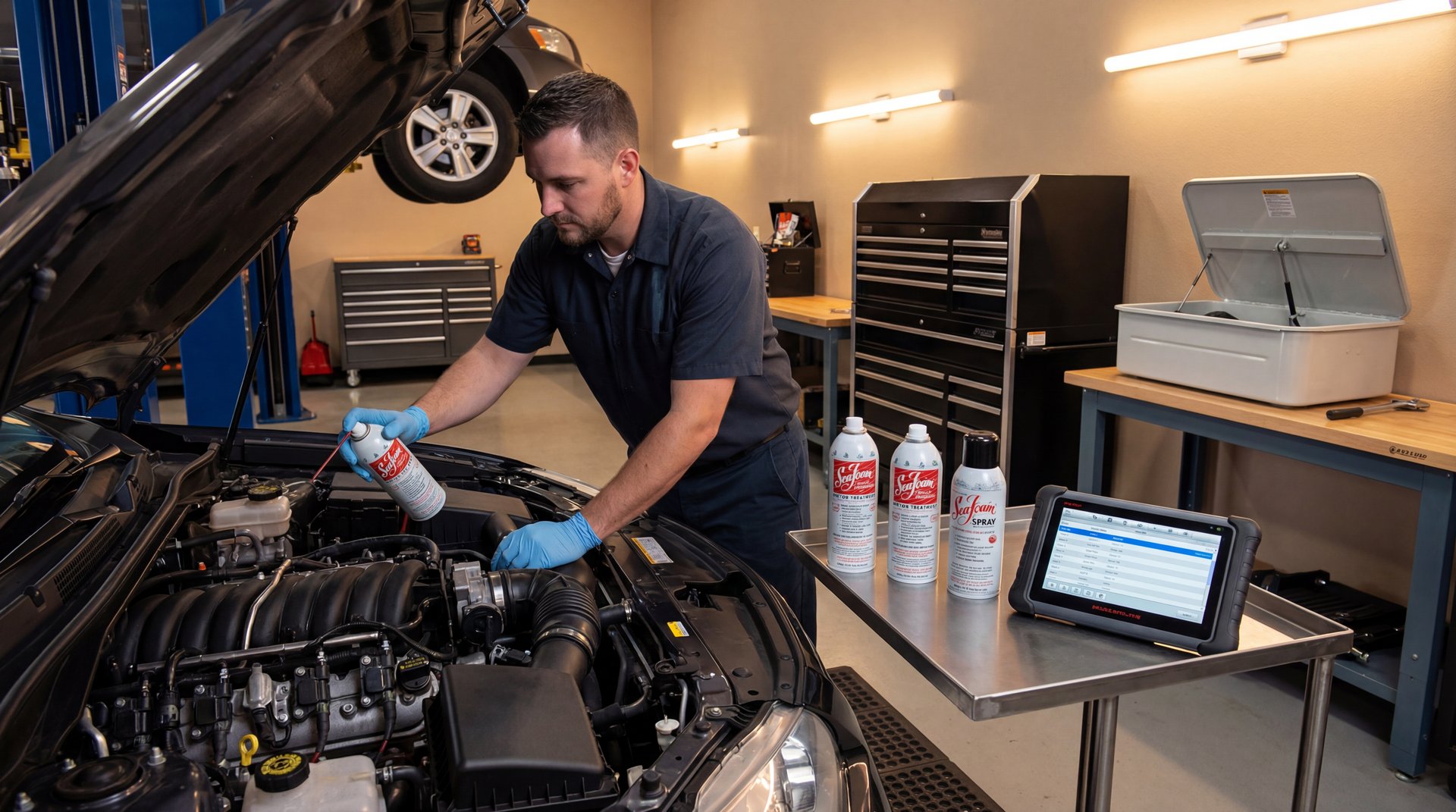
Alright guys, so today we’re gonna talk about cleaning your fuel system at home with Sea Foam. I’ve got a Subaru here that’s been having some detonation issues, which is basically the engine knocking because of carbon buildup on the valves and pistons. This stuff happens over time, and Sea Foam is one of the best ways to clean it out without tearing the whole engine apart.
What we’re gonna do is run Sea Foam through the intake system using a little trick with the evap hose. It’s a straightforward process, and I’m gonna walk you through exactly how to do it at home. The thing is, this method works great for cleaning carbon deposits that fuel additives can’t always reach, especially on those intake valves.
Understanding Carbon Buildup and Detonation
So before we jump into the process, let me explain real quick what’s happening with this Subaru. Carbon buildup on the valves and pistons is a common problem, especially on direct injection engines. What happens is, over time, carbon deposits accumulate on the back of the intake valves and on top of the pistons. These deposits create hot spots that cause the fuel to ignite at the wrong time – that’s your detonation or knocking.
The thing is, on gasoline direct injection (GDI) engines, the fuel doesn’t spray over the intake valves like it does on port injection engines. That means those detergents in your gas can’t reach behind the intake valves to clean them. That’s where Sea Foam comes in.
⚠️ Warning
If you’re hearing detonation or knocking sounds from your engine, don’t ignore it. Running the engine with severe detonation can cause serious damage to pistons, rings, and bearings. Address carbon buildup issues before they turn into expensive repairs.
🔧 What You’ll Need
- Sea Foam Motor Treatment (16 oz can)
- Small plastic straw or tubing
- Access to a vacuum line (evap hose or brake booster line)
- Running engine
- Well-ventilated area
Setting Up Your Sea Foam Treatment
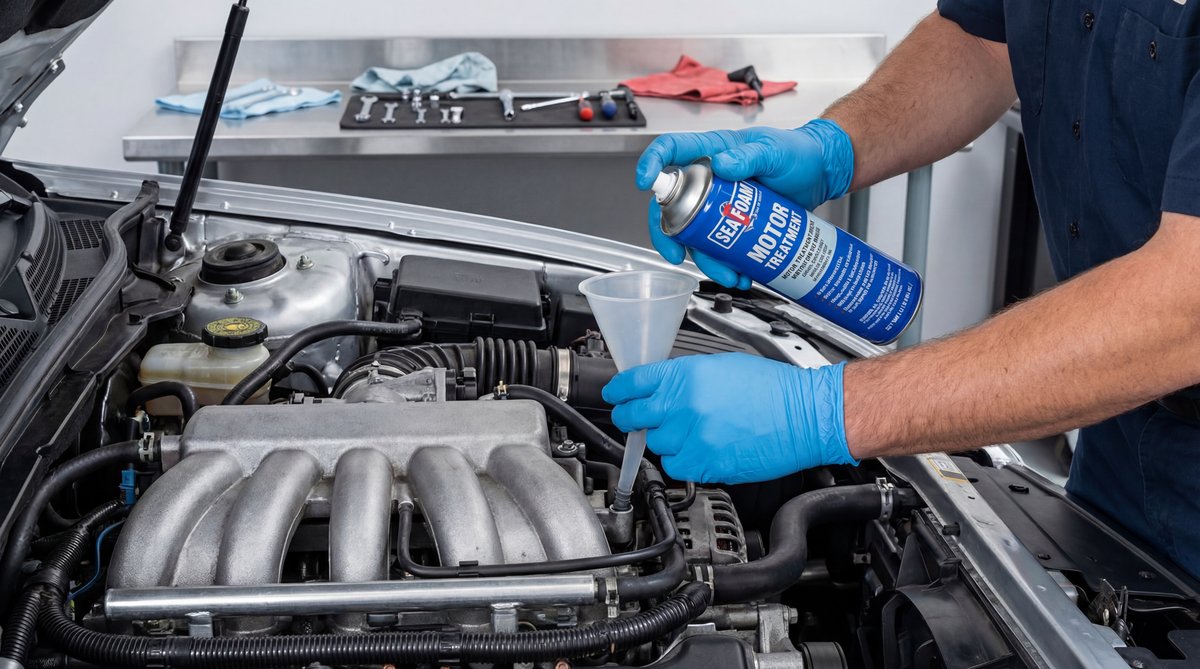
Alright, so here’s what we’re doing. I’ve got a can of Sea Foam Motor Treatment – this is the 16 oz can that you can pick up at pretty much any auto parts store or even places like Target and Home Depot. Runs about $18-20 for the can, which is way cheaper than paying a shop to do a fuel system cleaning.
The setup is pretty simple. You need to find a vacuum line on your engine – I’m using the evap hose connection on this Subaru. Basically, you want a line that goes straight into the intake manifold so the Sea Foam gets sucked right into the engine. Some guys use the brake booster line, some use PCV lines – just find a decent-sized vacuum line you can disconnect.
I put a little plastic straw that comes with the can right into the Sea Foam container. You’re gonna use this straw to feed the Sea Foam into that vacuum line. The thing is, you don’t want to just dump it all in at once – you want a steady flow going into the engine while it’s running.
🔧 Pro Tip
Do this treatment in a well-ventilated area or outside. You’re gonna get a massive cloud of white smoke coming out of the exhaust as the Sea Foam burns off the carbon. Your neighbors might think your car is on fire, but that’s totally normal.
Running Sea Foam Through the Intake System
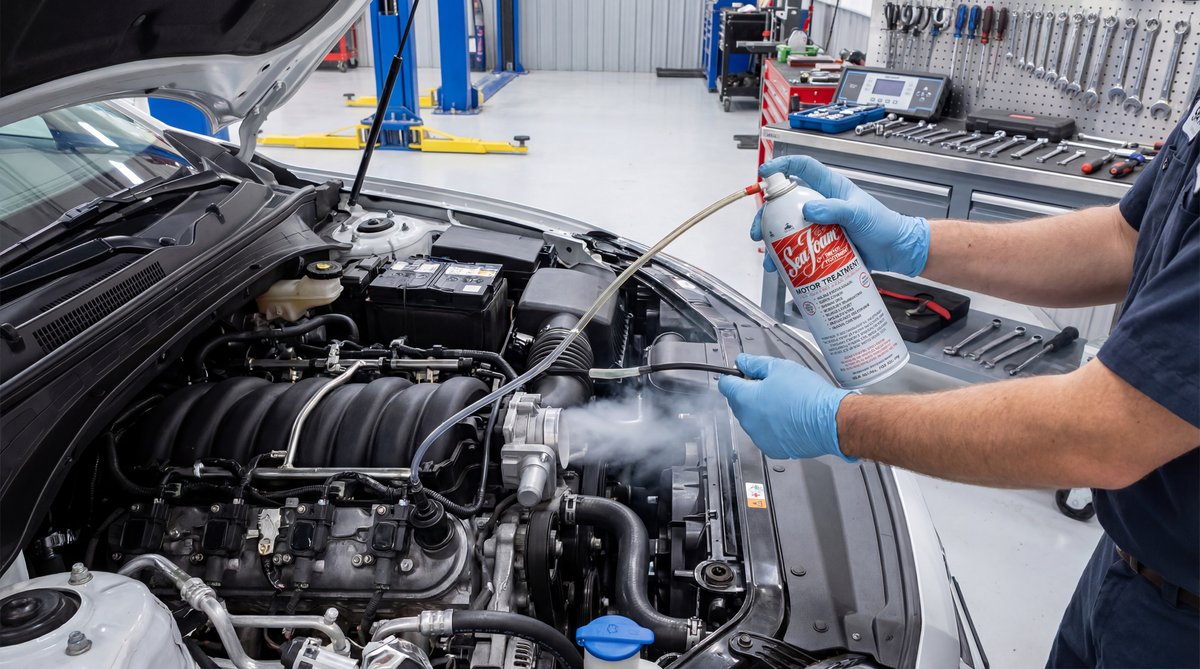
Okay, so we got the straw hooked up to where the evap hose goes. Engine’s running. Now we’re gonna start feeding this Sea Foam into the intake. What happens is the vacuum from the engine sucks the Sea Foam through that line, and it goes right into the combustion chambers.
Give it a little gas while you’re doing this. You want to keep the RPMs up a bit – maybe around 1500-2000 RPM. This helps pull the Sea Foam through and keeps the engine from stalling out. The thing is, you’re introducing a liquid into the intake, which can mess with your air-fuel mixture, so you gotta work the throttle a bit to keep it running smooth.
According to Sea Foam’s instructions, for this kind of deep cleaning, you can use pretty concentrated ratios – up to 50% Sea Foam to fuel. When you’re doing the intake method like we are here, you’re basically using it straight, which is fine because it’s going right into the engine where it needs to work.
❌ Common Mistake
Don’t let the engine stall out during the treatment. If you feed the Sea Foam in too fast, it’ll flood the engine and kill it. Keep the RPMs up and go slow and steady with the application. If the engine starts to stumble, ease off the Sea Foam for a second.
Real quick, let me explain what’s happening inside the engine. The Sea Foam is a highly-refined petroleum product that softens and dissolves carbon deposits. As it passes through the intake valves and into the combustion chambers, it’s breaking down all that crusty carbon buildup. Then when it burns during combustion, it carries all that crud out through the exhaust.
What to Expect During and After Treatment
Alright, so as you’re running this Sea Foam through, you’re gonna see some stuff happening. First off, there’s gonna be smoke – a lot of smoke. White smoke billowing out of your exhaust is totally normal. That’s the Sea Foam burning off along with all the carbon it’s cleaning out. It can look pretty dramatic, but that’s exactly what you want to see.
The engine might run a little rough during the treatment too. That’s because you’re basically introducing a cleaning solvent into the combustion process. Keep working that throttle, keep the RPMs up, and just let it do its thing. I usually run about half to three-quarters of the can through the intake like this.
This stuff works great for cleaning carbon off the valves and pistons without having to tear the whole engine apart.
After you’ve run the Sea Foam through, let the engine idle for a few minutes. Then take it for a drive – and I mean really drive it. Get on the highway, get the RPMs up, and let that engine work. This helps burn off any remaining Sea Foam and carbon deposits. You might still see some smoke for the first few miles, but it’ll clear up.
Now, what you should notice after this treatment is smoother running, better throttle response, and hopefully no more detonation. The carbon that was causing those hot spots is gone, so the fuel burns properly. On engines with rough idle, hesitation, or misfires from carbon buildup, this treatment can make a huge difference.
💰 Money Saver
Professional fuel system cleaning services at a shop can run $150-300 depending on where you go. This DIY method costs you about $20 in Sea Foam and maybe 30 minutes of your time. Plus, you can do it anytime you notice performance issues instead of scheduling an appointment.
How Often to Use Sea Foam
So guys always ask me, how often should you do this? The thing is, it depends on how you drive and what kind of engine you’ve got. For regular maintenance in the fuel tank, you can use about 1 oz per gallon of gas – so one 16 oz can treats 16 gallons. You can do that every oil change or every few tanks of gas.
For the deep cleaning intake treatment we just did, I’d say every 15,000-20,000 miles is good for most engines. If you’ve got a direct injection engine that’s prone to carbon buildup, maybe do it more often – like every 10,000 miles. And if you’re noticing symptoms like rough idle, hesitation, or reduced fuel economy, that’s a good sign it’s time for a treatment.
The thing is, Sea Foam also works in your crankcase oil. You can add it to your oil about 100-300 miles before an oil change to clean up sludge and deposits in there too. It’s safe for both conventional and synthetic oils, and it works in pretty much any engine – gas, diesel, 2-cycle, 4-cycle, whatever.
🔧 Pro Tip
If you’re storing a vehicle for the winter or any extended period, add Sea Foam to the fuel tank. It stabilizes fuel for up to 2 years and prevents gumming and varnish in your fuel system. Way better than coming back to a car that won’t start because the fuel went bad.
For diesel engines, yeah, you can use Sea Foam too. Same deal – it cleans injectors, helps with lubrication, and removes moisture from the fuel system. Basically, this stuff is pretty versatile, which is why I keep it in the shop.
Frequently Asked Questions
What are the best practices for using Sea Foam in a fuel system?
How often should I use Sea Foam to maintain my engine?
Are there any risks associated with using Sea Foam in my car?
Can Sea Foam be used in diesel engines as well as gasoline engines?
What are the signs that my engine needs a cleaning with Sea Foam?