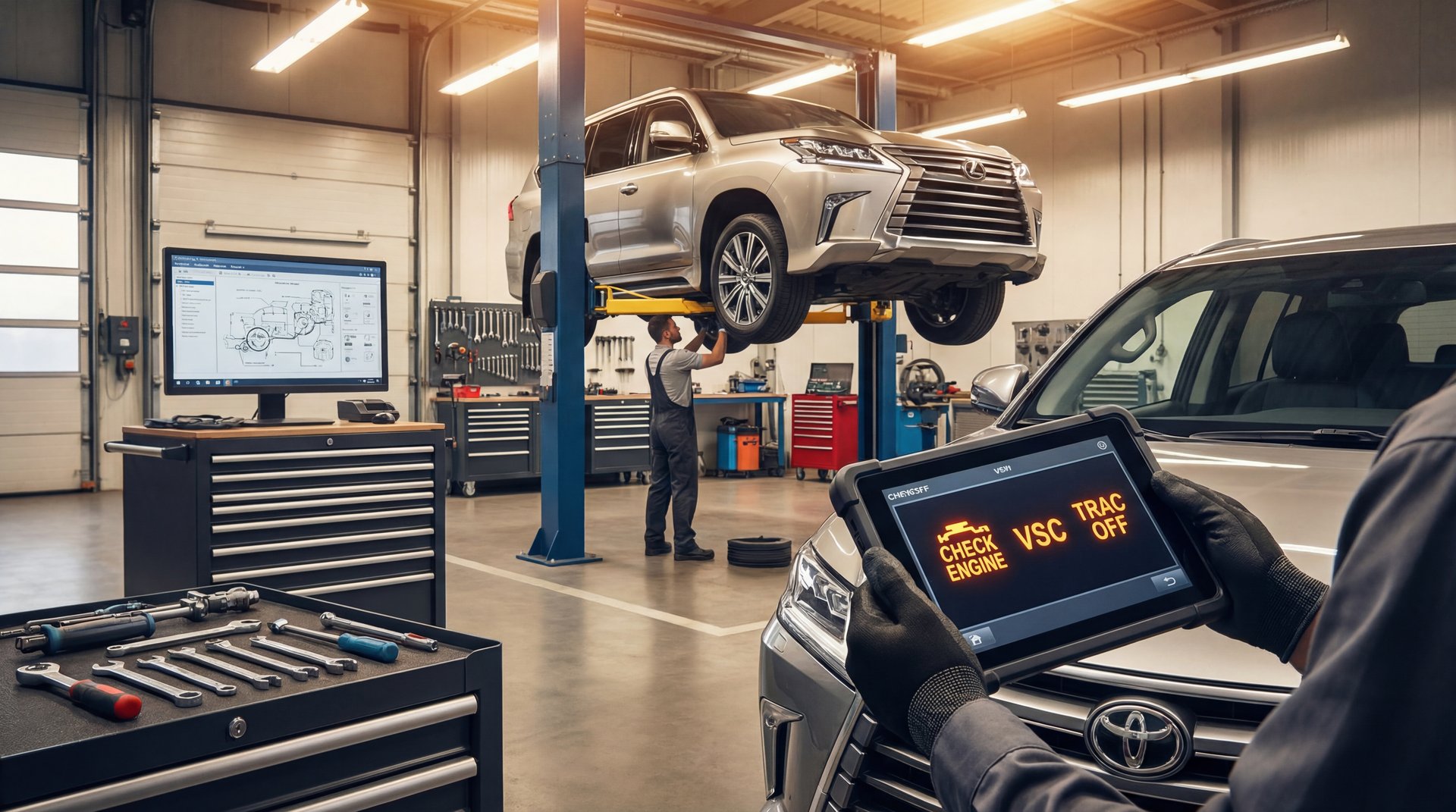
Alright guys, let me clear up some confusion real quick. If you’re seeing your check engine light, VSC light, and traction control light all lit up like a Christmas tree on your Toyota or Lexus dashboard, don’t panic. I’m gonna explain what’s actually going on here, because the thing is, this happens more often than you’d think, and most people immediately assume their traction control system is toast.
Here’s what you need to understand: just because all three lights are on doesn’t mean there’s anything wrong with your VSC or traction control system. What’s actually happening is something went wrong in your engine management system, and your Toyota or Lexus is being smart about it by disabling certain features as a safety precaution.
Why All Three Lights Come On Together
So here’s the deal. When your check engine light comes on in a Toyota or Lexus, the vehicle’s computer system recognizes that something in the engine management system isn’t operating correctly. Now, your traction control and VSC (Vehicle Stability Control) systems rely on the engine management system to function properly. They need accurate information about what the engine is doing to work correctly.
When the computer detects a problem that could potentially affect how the traction control operates, it basically says “you know what, I’m gonna disable these systems until we get this sorted out.” It’s actually a safety feature, not a secondary problem.
Just because your check engine light, VSC, and traction light are on doesn’t mean there’s something wrong with the VSC or traction control. You’ve had something go wrong in the engine management system which could potentially affect the traction control.
The VSC and traction control lights are basically warning you that these systems have been temporarily disabled. They’re not telling you that those systems are broken—they’re telling you they’ve been shut off as a precaution.
The Engine Management System Connection
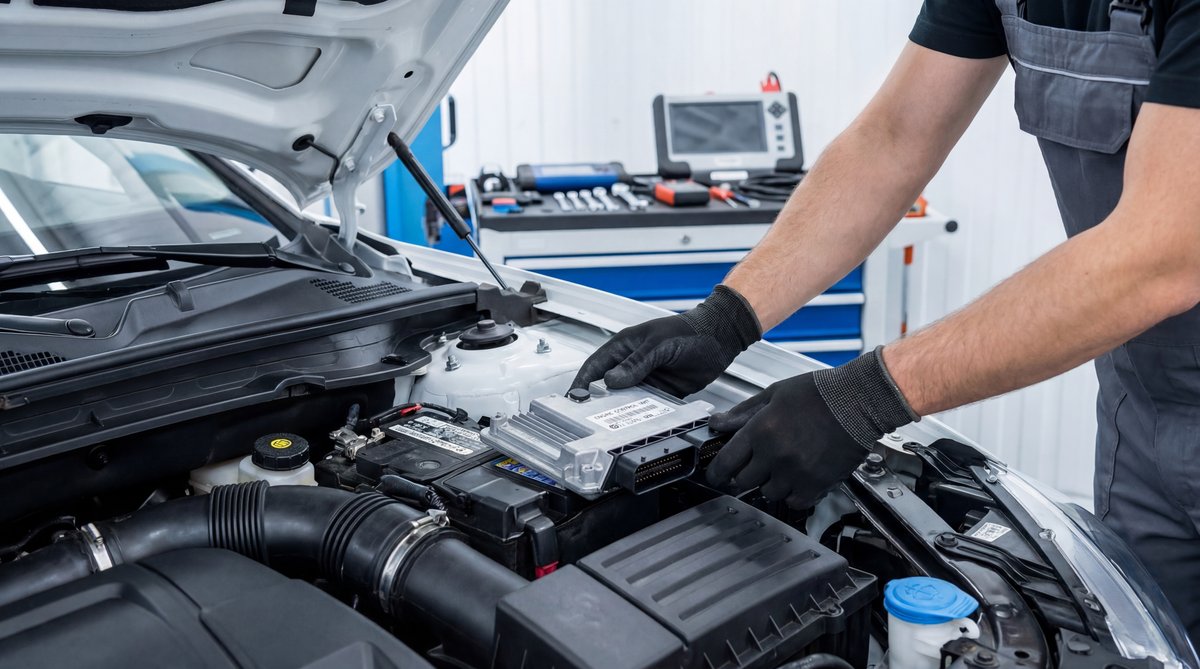
Let me break down why these systems are all connected. Your traction control and VSC systems need to communicate with the engine management system constantly. They need to know things like:
- How much power the engine is producing
- What the throttle position is
- Engine RPM and load
- Air-fuel mixture data
- Sensor readings from various engine components
If any of these inputs are compromised or throwing errors, your traction control can’t do its job properly. Imagine your traction control trying to reduce wheel spin when it doesn’t have accurate information about what the engine is doing—that could actually make things worse, not better.
🔧 Pro Tip
Don’t waste time checking your ABS system, wheel speed sensors, or traction control components first. Start with reading those check engine codes. That’s where your problem actually is, and fixing it will clear all three lights at once.
So Toyota and Lexus engineers designed these vehicles to play it safe. When the check engine light comes on, the system disables traction control and VSC until the underlying engine problem is resolved. It’s basically the car saying “I can’t guarantee these safety systems will work correctly right now, so I’m turning them off.”
Diagnosing the Real Problem
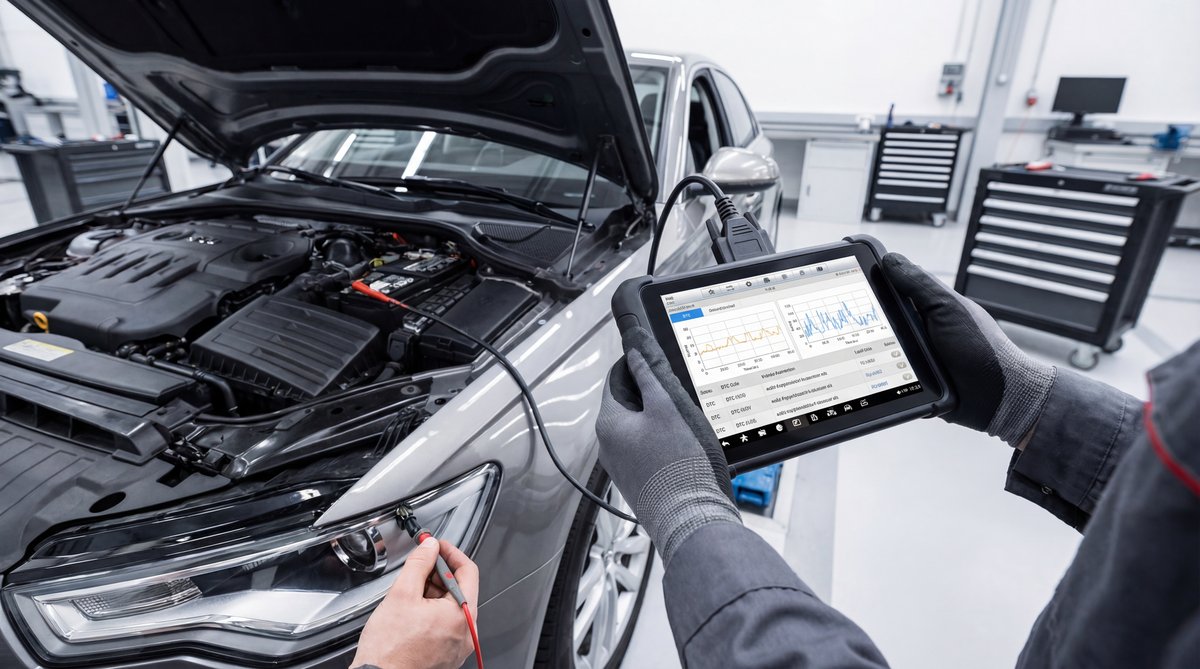
Alright, so what we’re gonna do here is figure out what’s actually wrong. The first step is reading those check engine codes. You need an OBD2 scanner for this—doesn’t have to be anything fancy, a basic code reader will work just fine for most issues.
🔧 Tools Needed
- OBD2 scanner or code reader
- Paper and pen to write down codes
- Phone or computer to look up code definitions
Plug your scanner into the OBD2 port—it’s usually located under the dashboard on the driver’s side. Turn your ignition to the ON position (you don’t need to start the engine), and let the scanner communicate with your vehicle’s computer.
The scanner will pull any stored diagnostic trouble codes (DTCs). These codes will start with a letter and have four numbers, like P0171 or P0420. Write down every code it gives you, because you might have more than one issue going on.
❌ Common Mistake
A lot of people clear the codes without writing them down first, then wonder what was wrong when the lights come back on. Always record your codes before clearing them. If you need help figuring out which sensor is causing the problem, check out our guide on how to figure out what engine sensor to replace.
Most Common Causes Behind These Lights
Based on what I’ve seen working on these vehicles, here are the most common culprits that trigger all three lights:
Gas Cap Issues: Yeah, I know it sounds too simple, but a loose or damaged gas cap is actually one of the most common causes. If your gas cap isn’t sealing properly, it creates an evaporative emissions leak, which triggers a check engine light. Make sure your gas cap is tight and the seal isn’t cracked or damaged.
Oxygen Sensors: These fail pretty regularly, especially on higher mileage vehicles. When an O2 sensor goes bad, it can’t accurately measure the air-fuel mixture, which throws off the engine management system.
Mass Airflow Sensor (MAF): A dirty or failing MAF sensor gives incorrect readings about how much air is entering the engine. The thing is, this affects engine performance and fuel delivery, which are critical for traction control operation.
Throttle Position Sensor: When this sensor fails, the computer doesn’t know what position your throttle is in. That’s a big problem for traction control, which needs to know exactly how much throttle you’re applying.
Catalytic Converter Issues: A failing catalytic converter or related oxygen sensors will definitely trigger a check engine light. This doesn’t affect traction control directly, but the computer disables it anyway as a precaution.
Vacuum Leaks: An engine vacuum leak creates lean running conditions and triggers multiple codes. These can be tricky to diagnose but are pretty common on older vehicles.
Fixing the Issue and Clearing the Lights
Once you’ve identified the actual problem causing your check engine light, fixing it is straightforward. Here’s the important part: once you fix the underlying engine issue, all three lights will go out. You don’t need to do anything special to the VSC or traction control systems.
After you make your repair, you can either clear the codes with your scanner or just drive the vehicle. The computer will run through its diagnostic cycles, and if the problem is actually fixed, the lights will turn off on their own after a few drive cycles.
⚠️ Warning
Don’t just clear the codes without actually fixing the problem. The lights will come right back on, and if you’re trying to pass emissions testing or state inspection, that won’t help you. If you’re dealing with inspection issues, you might want to read about common inspection problems, but the right way is always to fix the actual issue.
A drive cycle basically means driving the vehicle under various conditions—city driving, highway speeds, idle time—so the computer can test all its systems. Usually takes about 50-100 miles of normal driving for all the monitors to reset completely.
💰 Money Saver
Before you take your Toyota or Lexus to a shop and pay diagnostic fees, spend $20-30 on a basic OBD2 scanner. Many auto parts stores will even read your codes for free. Knowing what the codes are before you visit a mechanic can save you hundreds on unnecessary diagnostics.
Now, if you fix the problem and the check engine light goes off but the VSC and traction lights stay on, that’s a different situation. At that point, you might actually have a separate issue with the traction control system itself. But in my experience, that’s pretty rare—usually when you fix the engine problem, everything clears up.
The bottom line is this: don’t overthink it. These three lights coming on together is your vehicle’s way of protecting you. Find out what triggered the check engine light, fix that problem, and your VSC and traction control will come back online automatically. It’s actually a pretty smart system when you understand how it works.
Frequently Asked Questions
What are the most common causes of the VSC, traction control, and check engine lights coming on together?
How can I use an OBD2 scanner to diagnose the issue with my VSC and traction control lights?
Are there any specific tools I need to fix the VSC and traction control system in my Toyota or Lexus?
What safety precautions should I take when troubleshooting the VSC and traction control system?
How can I tell if the wheel speed sensor is faulty and causing the VSC and traction control lights to stay on?