
Alright guys, today I’m gonna show you one of the biggest red flags you need to watch out for when you’re buying a used vehicle. This is something that a lot of people miss, and it can cost you thousands of dollars down the road. We’re talking about when you check the oil and it looks clean and fresh, but something just doesn’t feel right. That thick, sticky feeling? Yeah, that’s a major warning sign that someone’s trying to hide some serious engine problems.
I ran into this exact situation recently, and the thing is, this trick is getting more and more common. Sellers know that buyers check the oil, so they’re getting sneaky about covering up engine noise and wear with heavy additives. Let me walk you through what I found and why you need to turn around and walk away when you see this.
Checking the Dipstick: What Normal Oil Should Feel Like
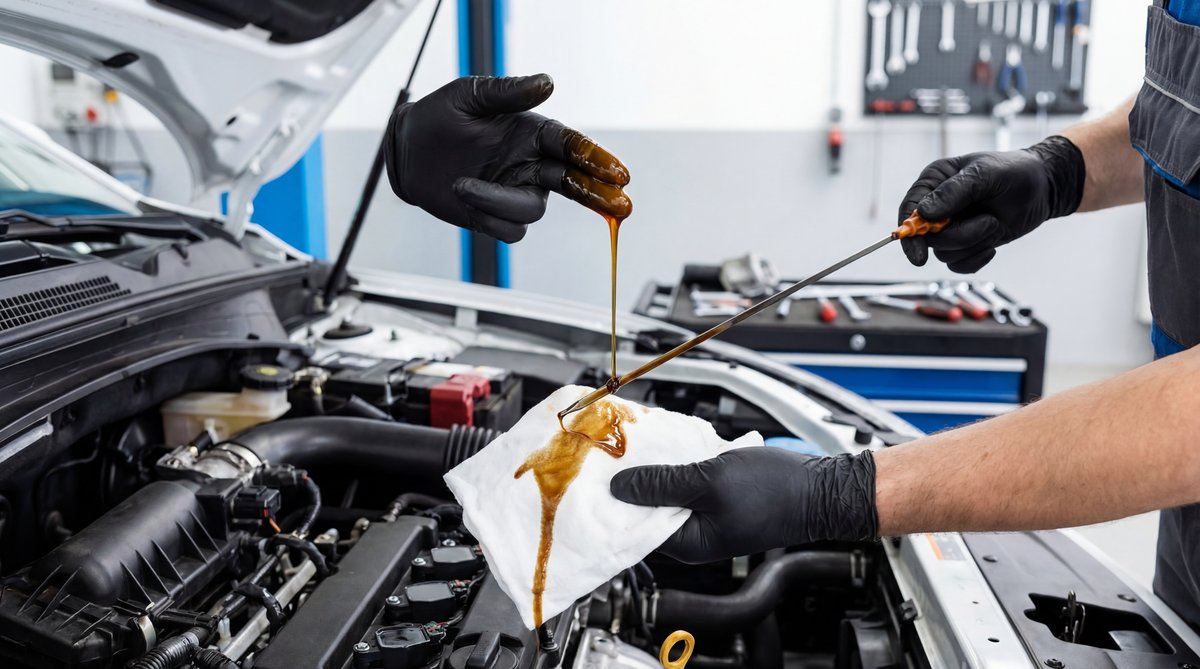
So here’s what happened. I pulled the dipstick on this used vehicle, and at first glance, the oil looked absolutely perfect. Nice and clean, good color – exactly what you’d want to see when you’re checking out a potential purchase. But the second I rubbed it between my fingers, something felt off.
Normal engine oil should feel slippery, smooth, almost like it wants to slide right off your fingers. That’s the whole point – it’s supposed to lubricate and flow through your engine easily. What I felt instead was this weird thickness, almost like it had a sticky quality to it. That’s not normal, guys.
🔧 Pro Tip
Always rub the oil between your thumb and finger when checking the dipstick. Don’t just look at it. You’re feeling for smoothness and checking for any grit, metal particles, or that telltale sticky texture that means additives. If you need a clean way to check without making a mess, I’ve got a cool trick for checking your engine oil that keeps your hands cleaner.
Good quality motor oil at the right viscosity should have a consistent feel to it. When it starts feeling thick and sticky, that’s usually a sign that someone’s added something to it. And in the used car market, that something is almost always a heavy oil additive designed to quiet down a noisy engine.
The Sticky Oil Test That Reveals Everything
After noticing that weird texture on the dipstick, I did what you should always do next – I pulled the oil cap off. This is where things got really interesting. When I took that cap off and looked at the oil residue on the underside and around the opening, I could see it was definitely thicker than it should be.
But here’s the real test: touch it. I know, sounds basic, but seriously, touch the oil on the cap and feel how it behaves. Normal oil will coat your finger but won’t really stick to it. This stuff? It was sticky. Like actually adhesive-feeling. That’s not how motor oil should behave under normal conditions.
⚠️ Warning
If you notice thick, sticky oil combined with an unusually clean appearance, this is a deliberate attempt to mask engine problems. The seller or previous owner has likely added heavy stop-leak additives or super-thick oil treatments right before selling the vehicle. This is fraud territory, and you don’t want any part of it.
What causes oil to get thick legitimately? Well, oil can thicken from oxidation, soot contamination, or in extreme cold from gelling. But when you see pristine, clean oil that’s also thick and sticky, that’s not natural breakdown – that’s an additive doing its thing.
What Those Thick Additives Are Really Hiding
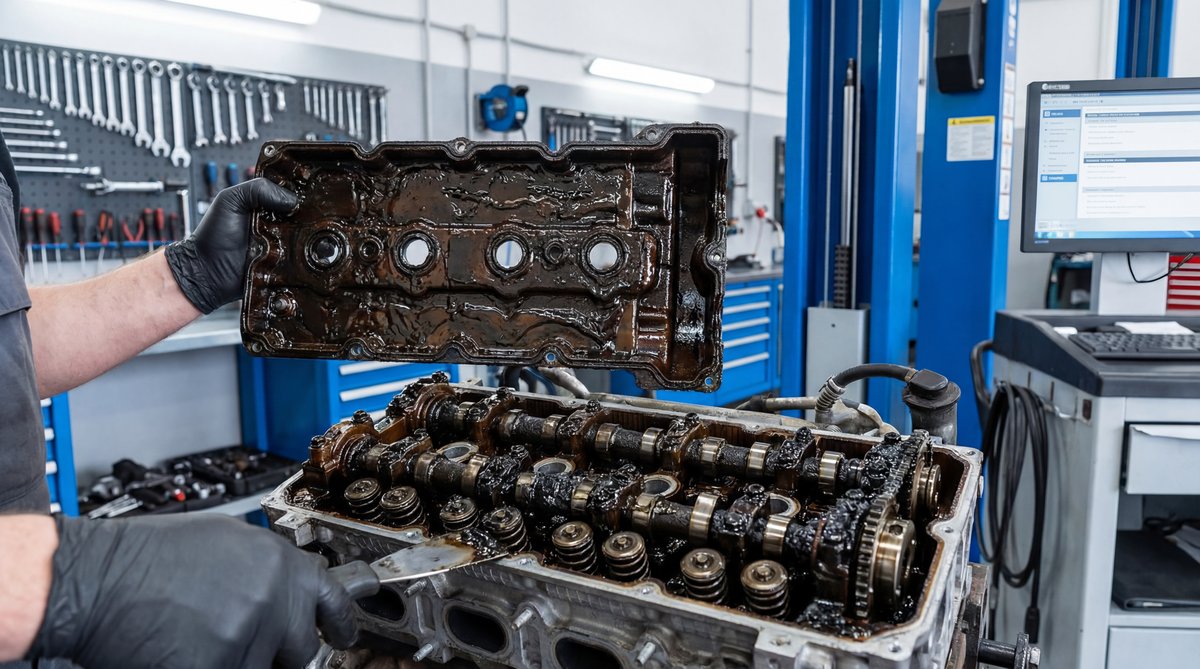
Alright, so why would someone dump thick oil additives into an engine before selling it? Simple – they’re trying to hide engine noise. These additives temporarily quiet down worn bearings, piston slap, lifter tick, and all sorts of other mechanical problems that would otherwise send you running.
The thing is, these thick additives don’t actually fix anything. They just mask the symptoms for a little while. Think of it like putting duct tape over your check engine light – the problem’s still there, you just can’t see it anymore.
This thing needs the motor. Do not buy it. Stay far away.
These additives work by increasing the viscosity of the oil way beyond what the manufacturer intended. Instead of 5W-30 flowing through your engine, you’ve essentially got something closer to honey trying to squeeze through tight clearances. Yeah, it might quiet things down temporarily by filling in worn gaps, but it’s also:
- Reducing oil flow to critical engine components
- Increasing oil pressure beyond safe levels
- Preventing proper lubrication in cold starts
- Hiding serious mechanical wear that’s only getting worse
❌ Common Mistake
Don’t think you can just change the oil and solve the problem. If someone added these thick additives to hide engine noise, there’s already significant internal wear happening. An oil change might bring back all that noise – and reveal the real problem you’re about to buy.
The most common additives people use for this trick are the “engine restore” or “stop smoke” products you see at auto parts stores. They’re not inherently bad when used correctly on an engine you’re trying to nurse along, but using them to fool a buyer? That’s a different story.
The Engine Noise Test You Can’t Skip
So after I noticed the sticky oil, I did what you should always do – I started the engine and took it for a test drive. Even with all those additives in there, after just about 5 minutes of driving, this thing started making noise. And I’m not talking about a little tick here and there. This engine sounded like a diesel, just ticking away constantly.
That knocking and ticking you hear – that’s metal-on-metal contact happening inside the engine. Could be worn bearings, could be piston slap, could be lifters that are completely shot. Whatever it is, it’s expensive. We’re talking thousands of dollars in engine work, potentially a complete motor replacement.
Here’s what really gets me – even with the thick additives trying to quiet everything down, the noise still came through. That means the internal wear is so bad that not even heavy-duty stop-leak treatments can mask it anymore. Imagine how bad it’ll sound once that additive-laden oil gets changed out for normal oil.
When you’re test driving a used vehicle, always listen carefully during these specific moments:
- Cold start – that’s when worn engines are loudest
- While idling after warming up – listen for ticking or knocking
- During acceleration – worn bearings often get louder under load
- When decelerating – piston slap can become more obvious
🔧 Pro Tip
Bring a mechanic’s stethoscope on your test drives. You can pick one up for about $10-15, and it’ll let you pinpoint exactly where engine noises are coming from. Touch it to different parts of the engine block while it’s running – you’ll hear problems that might not be obvious to your ear alone.
Why You Need to Walk Away From These Vehicles
Look, I get it. Maybe the price is right, maybe it’s the exact model you’ve been looking for, maybe the seller seems like a nice person. None of that matters when you’re looking at a vehicle with a worn-out engine that someone’s actively trying to hide from you.
The math just doesn’t work in your favor. Even if you negotiate the price down because of the engine noise, you’re still going to be into this thing for way more than it’s worth once you factor in the repair costs. And that’s assuming the rest of the vehicle is in good shape, which is rarely the case when someone’s neglected the engine this badly.
| Scenario | Your Cost | Better Option |
|---|---|---|
| Buy it “cheap” + fix engine | $8,000-$12,000+ | Find a vehicle with a good engine for $10,000 |
Beyond the money, there’s also the reliability factor. Even if you do fix the engine, what else has been neglected? If someone couldn’t afford to maintain the engine properly, they probably skimped on transmission service, brake work, suspension components – all of it. You’re buying into a money pit.
And here’s something else to think about – the person selling this vehicle knows exactly what they’re doing. They deliberately added those thick additives to deceive you. That’s not someone who’s been honest about maintenance records or disclosed other issues. What else are they hiding?
💰 Money Saver
The best money you can spend when buying a used vehicle is the $100-150 for a pre-purchase inspection at an independent shop. They’ll catch stuff like this additive trick, plus everything else that might be wrong. It’s way cheaper than buying someone else’s problem.
The used car market is full of good vehicles from honest sellers. Yeah, it might take longer to find the right one, but that’s time well spent. When you come across sticky, thick oil combined with engine noise, that’s the universe telling you to keep looking.
Remember, basically what we’re dealing with here is someone who’s tried to pull a fast one. They know the engine’s shot, they know it makes noise, and they’re banking on you not knowing how to check for their cover-up. Don’t be that buyer. Do the oil texture test, pull the oil cap, listen carefully to the engine, and when something feels wrong, trust your gut and walk away.
Frequently Asked Questions
What are the signs that engine oil has become too thick?
How does fuel dilution affect the viscosity of motor oil?
What are the risks of driving with thick engine oil?
How can I tell if my engine oil is contaminated with soot?
What are the best practices for preventing oil thickening?