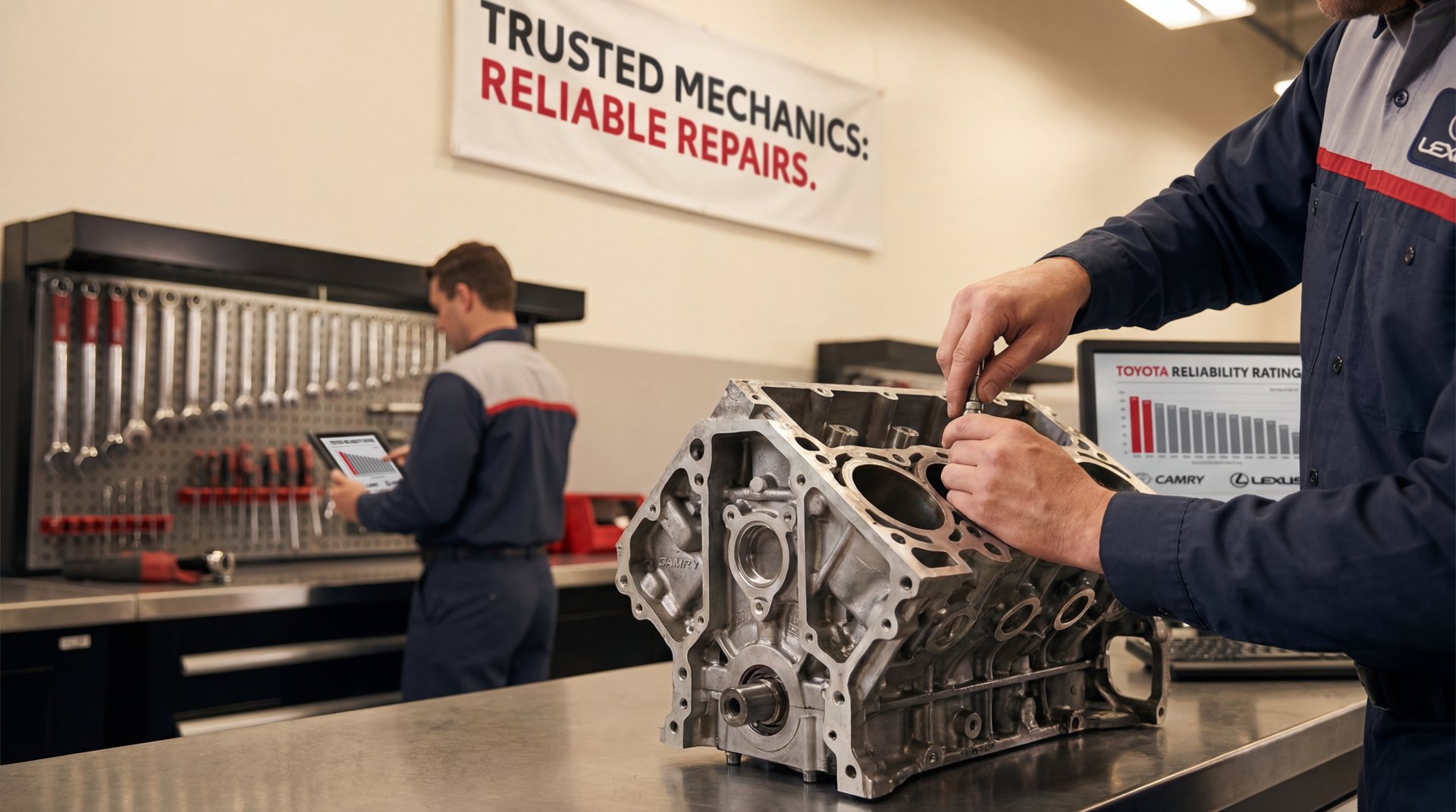
Alright guys, so this morning we had a little fun in the shop. I walked around with my camera and asked every single person one simple question: what’s the most reliable car ever built? The answers? Well, let me just say Toyota better be paying these guys because it was basically unanimous. We’re talking mechanics who work on everything from beaters to brand new trucks, and they all landed on the same answer. Let me show you what everybody said.
Asking the Mechanics
So I started in the office and asked what the most reliable vehicle is. First answer? Toyota Camry. Then I went around to the rest of the crew. Allan said Lexus. Fernando didn’t even hesitate – Toyota. Same thing from pretty much everybody else in the shop.
The thing is, these aren’t just random opinions. These are guys who see hundreds of cars roll through the bay every month. When a mechanic tells you a car is reliable, they’re basing that on what they DON’T see. The cars that aren’t breaking down are the ones they remember, because frankly, we see way more problem cars than good ones.
I think that’s Toyota’s hands down. The cars that don’t come back for major repairs? Those are almost always Toyotas.
What we’re gonna do is break down why that is, because there’s actual data backing up what my crew was saying. Consumer Reports surveyed around 380,000 vehicles covering model years from 2000 all the way to 2025, and guess what dominates the top of their reliability rankings? You guessed it – Toyota and Lexus.
Why Toyota Dominates Reliability Surveys
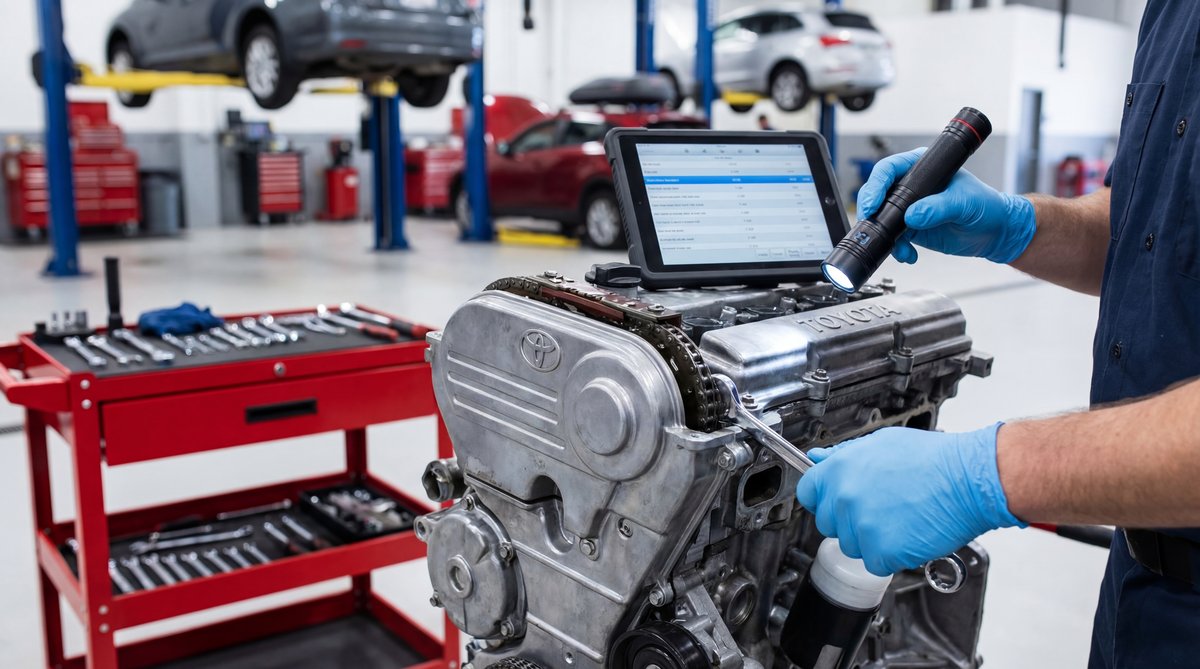
Alright, so why does Toyota keep coming up? It’s not just one thing. Basically, Toyota has built their entire reputation on engineering cars that last. They’re not always the fastest, they’re not always the prettiest, but they’re engineered to run for 200,000, 300,000, even 400,000 miles with regular maintenance.
The real secret? Toyota doesn’t rush new technology into their cars. While other manufacturers are cramming in the latest gadgets and unproven systems, Toyota tests everything to death before it goes into production. That means fewer surprises down the road and fewer trips back to the shop for weird electrical gremlins or transmission problems.
🔧 Pro Tip
When you’re shopping for a reliable used car, look for Toyota models that are a few years old rather than brand new. You get proven reliability without paying the new car premium, and you know exactly which years had issues (if any) so you can avoid them.
Another thing – Toyota builds cars with maintenance in mind. Oil changes are straightforward, parts are available everywhere, and the DIY community for these vehicles is huge. That means you can find tutorials, torque specs, and help for basically any repair you need to do.
The Specific Models That Never Die
Let’s talk specific models, because not every Toyota is created equal. The Camry came up first in our shop poll, and for good reason. We’re talking about a car that’s been in production since 1982 and has built a rock-solid reputation. The V6 and four-cylinder models from the 2000s and 2010s are bulletproof if you keep up with basic maintenance.
Real quick on the Camry specs – if you’ve got a 2018-2021 model with the 2.5L four-cylinder, you’re looking at 4.8 quarts of oil with the filter. Toyota recommends 0W-20 synthetic, and honestly, just use what they tell you. These engines are designed around specific oil weights, and using the right stuff makes a difference over the long haul.
💰 Money Saver
Buy your oil filters in bulk online. The Toyota OEM filter (part number 04152-YZZA6 for many models) costs way less when you buy a pack of six. Just make sure you verify the part number for your specific year and engine before ordering.
Then you’ve got the Corolla, which is basically the Camry’s little brother. Same philosophy, slightly smaller package. Consumer Reports consistently ranks the Corolla in their top reliability lists, and we see the same thing in the shop. These cars just don’t break.
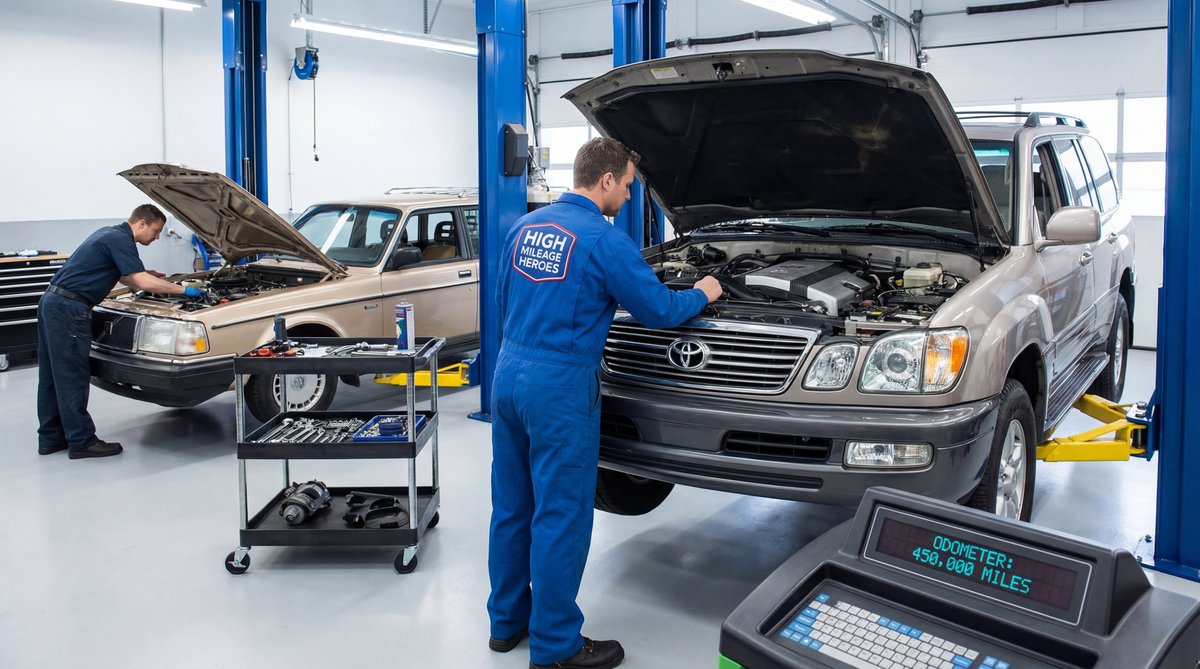
Now if you want something more rugged, the 4Runner and Land Cruiser are legendary. The 4Runner especially – that body-on-frame SUV from the mid-90s through today is basically indestructible. The 2026 model year 4Runner scores at the very top of predicted reliability ratings. We’re talking about vehicles that people drive to 300,000 miles and then sell for good money because everybody knows they’ll keep going.
❌ Common Mistake
A lot of people skip the transmission fluid changes on Toyotas because they think “lifetime fluid” actually means forever. Wrong. Even on cars where Toyota says the fluid is “lifetime,” changing it every 60,000-80,000 miles adds years to your transmission life. Don’t skip this.
The Land Cruiser is on another level. If you’ve got one of the 2008-2021 models with the 4.5L V8, you’re looking at about 8 quarts of oil with the filter. These things are built to survive third-world conditions, which means they laugh at normal American driving. The only downside? They hold their value like crazy, so finding a cheap used one is tough.
Toyota vs Lexus: Understanding the Difference
So Allan in our shop said Lexus, and he’s not wrong. Here’s the deal – Lexus IS Toyota. It’s their luxury division, and they use a lot of the same platforms and drivetrains. The difference is that Lexus adds more luxury features, better sound insulation, and generally nicer interiors.
From a reliability standpoint, Lexus actually edges out Toyota in a lot of surveys. The ES and LS sedans are built on proven Toyota platforms but get even more quality control attention during manufacturing. The ES350, for example, shares a lot of DNA with the Camry and Avalon but comes with that Lexus polish.
What’s cool about Lexus is that because they’re based on Toyota platforms, parts availability is great and repairs aren’t as expensive as you’d think for a luxury brand. An ES350 uses a lot of the same mechanical components as a Camry V6, which means your local parts store probably has what you need in stock.
The thing is, Lexus does have more electronics and luxury features that can occasionally give you headaches. Stuff like air suspension, advanced audio systems, and more complex climate control setups. But the core mechanical stuff – engine, transmission, drivetrain – that’s all Toyota-proven and built to last.
🔧 Pro Tip
If you’re buying a used Lexus, get one that’s a few years old and let the first owner eat the depreciation. A 3-4 year old ES or GX will have sorted out any minor first-year issues, and you’ll still have years of reliable driving ahead of you at a fraction of the new price.
Maintenance Secrets That Keep These Cars Running
Alright guys, here’s where the rubber meets the road. Even the most reliable car ever built will turn into a money pit if you don’t maintain it. The good news? Toyota and Lexus maintenance is pretty straightforward, and if you follow the schedule, these cars will outlast your car payments by a decade.
First thing – oil changes. I know everybody talks about extended oil change intervals now, but here’s my take: change your oil every 5,000 miles with good synthetic. Yeah, the manual might say 10,000 miles, but oil is cheap compared to engines. Use the weight Toyota specifies for your engine – they didn’t pick those numbers randomly.
⚠️ Warning
Always use jack stands rated for your vehicle’s weight when working underneath. Place them on the factory lift points (check your owner’s manual for exact locations). A hydraulic jack can fail – jack stands save lives. Wear safety glasses and gloves for every job, and keep a fire extinguisher nearby when working around fuel systems.
Transmission fluid is huge. Even on “sealed” transmissions, getting that fluid changed makes a massive difference. On most Toyotas and Lexus models, every 60,000 miles is a good interval. Use genuine Toyota Type IV fluid or the Lexus equivalent – aftermarket stuff is cheaper but not worth the risk on a transmission that should last 200,000+ miles.
Cooling system maintenance is another big one. Flush the coolant every 50,000-60,000 miles and use genuine Toyota red coolant. The OEM stuff is designed to work with the specific metals and seals in these engines. Mixing different coolants or using universal stuff can cause corrosion over time.
🔧 Basic Maintenance Tools You’ll Need
- 3/8″ drive socket set with metric sizes
- Oil filter wrench (check your specific filter size)
- Jack and jack stands (rated for vehicle weight)
- Torque wrench (for critical fasteners like lug nuts)
- Drain pan (at least 6-quart capacity)
- Safety glasses and nitrile gloves
- Funnel for oil and coolant
Timing belts are critical on older models that have them. If your Toyota or Lexus has a timing belt (check your owner’s manual), it needs replacement every 90,000-100,000 miles. This is not optional. A broken timing belt on an interference engine means bent valves and thousands in repair costs. The good news is a lot of newer Toyotas use timing chains that last the life of the engine.
Brakes and suspension – inspect these regularly but don’t go crazy replacing stuff that’s still good. Toyotas tend to eat front brake pads faster than rears, so check them every 10,000 miles. For wheel lug nuts, most Toyotas spec around 76 ft-lbs of torque, but always verify in your service manual for your specific model. Over-torquing can warp rotors and crack wheels.
Real quick on common issues – even reliable cars have some quirks. Older Camrys (2007-2011) can have excessive oil consumption on the four-cylinder engine. Early Tacomas had frame rust issues in salt-belt states. The 2007-2009 Tundra had cam tower issues on the 5.7L V8. The thing is, these are known issues with fixes, and they’re the exception rather than the rule.
💰 Money Saver
Join a Toyota or Lexus owner forum for your specific model. Guys on these forums have detailed every common issue, every torque spec, and every shortcut for maintenance. You’ll learn which repairs you can DIY easily and which ones are worth taking to a shop. Plus, you can often find bulk buys on common maintenance parts.
Battery maintenance is simple but important. Most Toyotas don’t need anything fancy – just clean the terminals once a year and replace the battery every 4-5 years before it leaves you stranded. Use the correct group size for your model (check the original battery or your owner’s manual).
One more thing – keep records of everything you do. Write down the mileage, date, and what you did. When it comes time to sell, a binder full of maintenance records adds serious value. Plus, it helps you track when things are due and catch patterns if problems start developing.
Frequently Asked Questions
What are the top 5 most reliable cars according to mechanics?
How does the reliability of Toyota compare to Lexus?
What are the common issues with the most reliable cars?
How do electric cars like Tesla compare in reliability to traditional cars?
What are the key factors that contribute to a car’s reliability?
So that’s basically it. My whole crew agrees – if you want a car that’s gonna last, Toyota is your answer. Whether it’s a basic Corolla, a family hauler Camry, a rugged 4Runner, or a fancy Lexus, you’re getting proven reliability. Keep up with maintenance, don’t abuse it, and these things will outlast most other cars on the road by a huge margin. Let us know what you think in the comments – do you agree, or have you had a different experience? What’s the most reliable car you’ve ever owned?