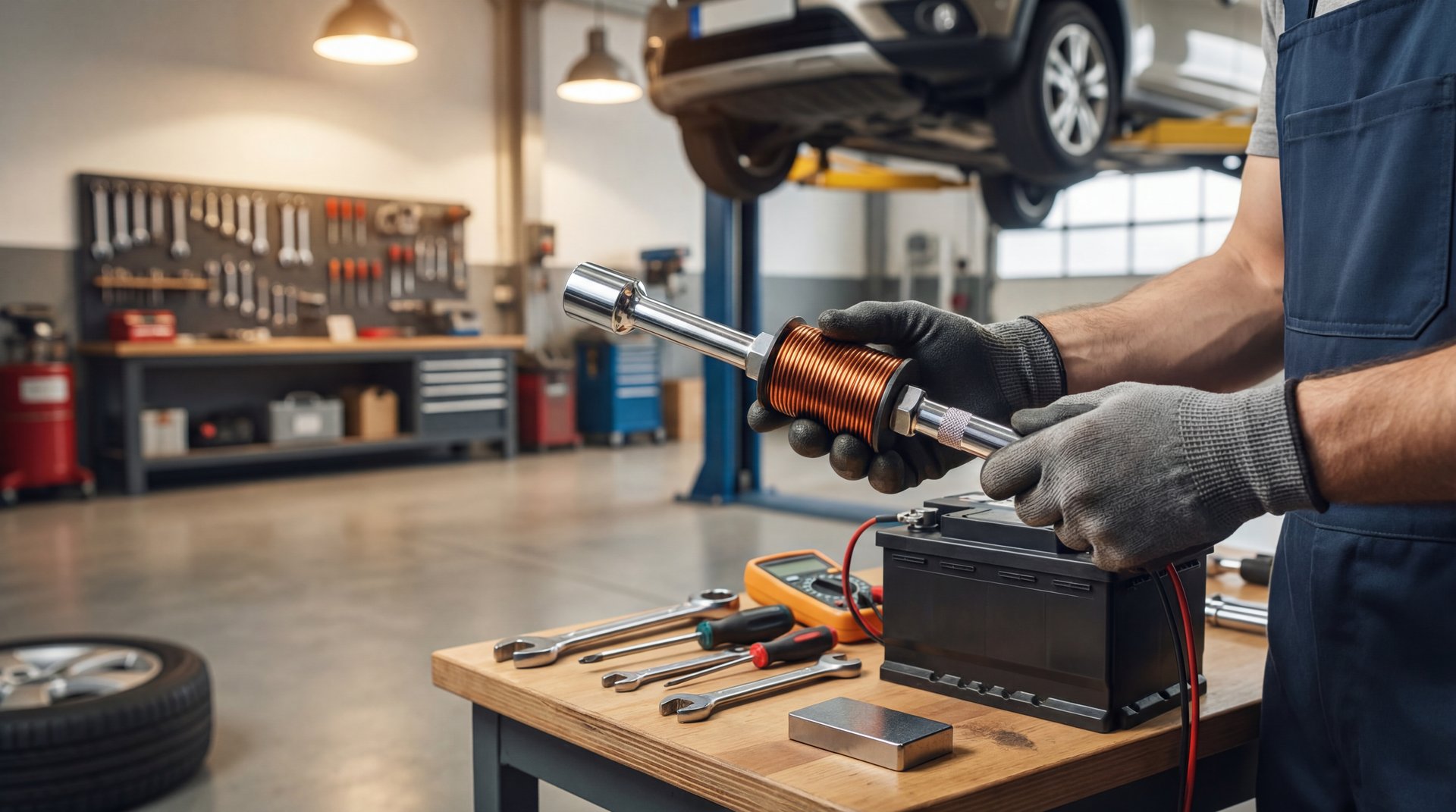
Alright guys, so I’ve been hearing about this old mechanic’s trick for years, and today we’re finally gonna put it to the test. The idea is pretty simple – wrap some wire around any metal tool, zap it with a battery, and boom, you’ve got yourself a magnetic tool. Sounds almost too easy, right? Well, we’re gonna see if it actually works with a basic socket extension and a car battery. But I gotta be real with you – this experiment is sketchy as hell and probably not something you should try at home. Still, the flying mechanic is gonna give it a shot so you can see what happens.
The Wire-Wrapping Experiment
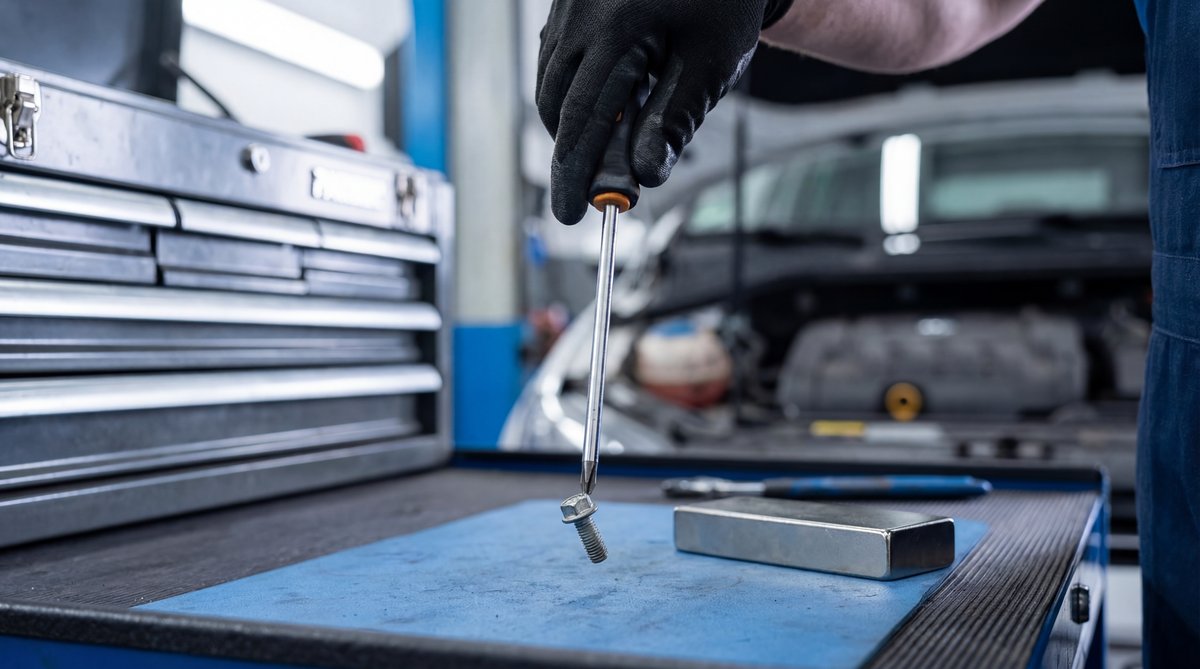
So here’s what we’re gonna do. I’ve got a basic socket extension – nothing fancy, just your standard chrome-plated tool that every mechanic has in their box. First thing I did was test it against a bolt to confirm it’s not magnetic right out of the gate. And yep, nothing. No attraction whatsoever.
The setup is pretty straightforward. I wrapped a bunch of wire around the extension, creating basically a coil. The theory here is that when you run electrical current through this coil, it creates a magnetic field that can temporarily magnetize the metal inside. We’re talking basic electromagnet stuff from high school physics class.
⚠️ Warning
What I’m about to do is unsafe, and I really wouldn’t recommend trying this without proper safety gear. The wire can melt, you can get burned, and the battery can blow up or vent dangerous gases. I’m doing this for demonstration purposes, but seriously – don’t try this at home without understanding the risks.
Now for the exciting part. I touched the positive and negative battery terminals with the wire ends a couple times. You want quick pulses of current, not a sustained connection – otherwise you’re basically creating a dead short across your battery, which is asking for trouble.
After a few quick taps, I tested the extension against that same bolt again. And what do you know – it worked. The bolt stuck to the extension. We’ve got ourselves a magnetic tool.
Why This Actually Works (Sort Of)
Alright, so let’s talk about what’s actually happening here, because it’s not quite as permanent as you might think. When you pass electrical current through a coil of wire wrapped around a ferromagnetic material like steel, you’re creating an electromagnet. The current flowing through the coil generates a magnetic field, and that field temporarily aligns the magnetic domains inside the steel.
The thing is, this magnetization is pretty weak and doesn’t last very long. We’re talking about a field strength that’s way lower than what you’d get from a real permanent magnet or even a proper commercial magnetizer. A simple wire coil powered by brief battery contact might produce a magnetic field on the order of 0.001 to 0.01 tesla at best – compare that to the 0.3 to 1.4 tesla you get from a neodymium magnet, and you can see why this trick isn’t exactly a game-changer.
What you’re getting is temporary magnetism that fades pretty quickly. The magnetic domains in the steel will gradually return to their random orientation, especially when the tool gets bumped around or heated up during normal use. Real permanent magnets are made from special alloys and are magnetized using industrial equipment that produces way stronger and more controlled magnetic fields.
If you wanted to truly permanently magnetize a steel tool, you’d need either a proper magnetizer that delivers a controlled pulse of high current (we’re talking 20 to 50 amps, not the random shorting we just did), or you’d need to heat the steel above its Curie temperature – around 770 degrees Celsius for iron – and then cool it in a strong magnetic field. Neither of those things are happening with our wire-and-battery setup.
The Real Safety Concerns You Need to Know
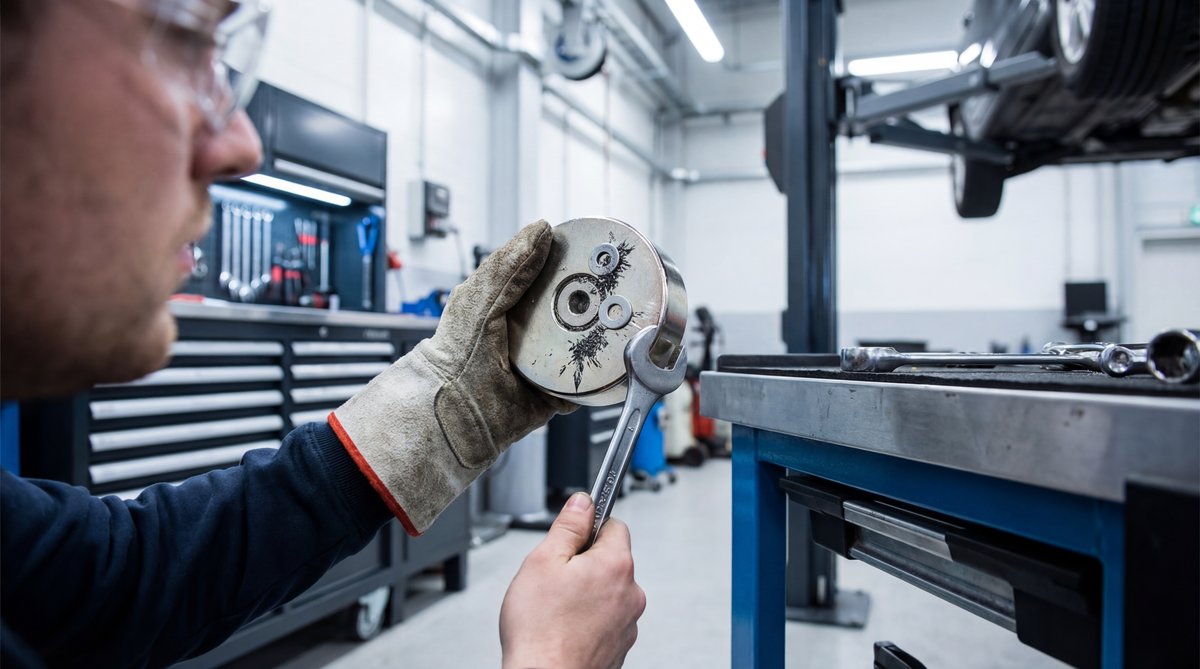
Let’s get serious for a minute about why this experiment is dangerous. When you short a battery with wire like this, you’re pulling a huge amount of current through that wire. Basically, the only thing limiting the current is the internal resistance of the battery and the resistance of your wire – and neither of those are very high.
That means the wire heats up fast. Real fast. The enamel insulation on magnet wire can melt, the copper itself can get hot enough to burn you, and if you’re using thin wire, it might even burn through completely. I’ve seen guys accidentally weld wire to battery terminals doing stuff like this.
❌ Common Mistake
Using a lithium battery or a newer AGM battery for experiments like this is extra dangerous. These batteries can deliver even more current than traditional lead-acid batteries, and lithium batteries in particular can go into thermal runaway if you abuse them. Stick to old-school flooded lead-acid batteries if you absolutely must experiment, and even then, be extremely careful.
The battery itself is also at risk. When you dead-short a car battery, it can overheat, vent hydrogen gas (which is explosive), or in extreme cases, the internal plates can warp or short together permanently. You might ruin your battery doing this, or worse, cause it to explode and spray acid everywhere.
If you’re gonna mess around with this kind of thing, here’s what you absolutely need:
- Insulated gloves rated for electrical work
- Safety glasses or a face shield
- Fire-resistant clothing – no synthetic fabrics that can melt
- A fire extinguisher nearby (seriously)
- Work outdoors or in a well-ventilated area away from flammable materials
And honestly? Even with all that safety gear, this is still sketchy. There are way better and safer ways to get a magnetic tool, which we’re gonna talk about next.
Better Options for Magnetic Tools
Alright, so now that we’ve proven the wire trick sort of works – but is dangerous and gives you weak, temporary magnetism – let’s talk about what you should actually do if you need magnetic tools in your shop.
The easiest option is to just buy tools that are already magnetic. Magnetic bit holders are cheap and work great. You can grab a decent magnetic bit holder for like five to ten bucks, and it’ll hold your bits way better than anything you’re gonna make with battery wire. Brands like Wiha and Snap-on make good ones, but even the cheap ones from Harbor Freight work fine for most jobs.
🔧 Better Magnetic Tool Options
- Commercial bench magnetizer/demagnetizer ($50-$200)
- Neodymium pickup tools ($6-$40)
- Magnetic bit holders ($5-$20)
- Magnetic parts trays ($8-$25)
- Pre-magnetized screwdriver sets ($15-$50)
If you want to magnetize your own tools properly, get yourself a bench magnetizer. These things are designed specifically for this job. They’ve got strong permanent magnets or controlled electromagnets inside, and you just stroke your tool across them a few times to magnetize it. A basic one costs maybe 50 to 100 bucks, and it’ll last forever. Way safer than playing with battery terminals.
For picking up dropped bolts and screws, nothing beats a telescoping magnetic pickup tool. These use neodymium magnets – the super-strong rare-earth magnets – and they can lift several pounds of steel. A decent one costs 10 to 20 bucks and will save your back from crawling around on the floor looking for that bolt you dropped into the engine bay.
🔧 Pro Tip
If you just need temporary magnetism on a screwdriver to hold a screw in place, here’s a safe trick: stroke the screwdriver tip across a strong permanent magnet 20 to 30 times in the same direction. This will weakly magnetize it enough to hold fasteners for installation. When you don’t want it magnetic anymore, just tap it on your bench a few times or stroke it back and forth randomly to scramble the magnetic domains.
You can also buy small neodymium disc magnets for a couple bucks each and attach them to your tools with epoxy or tape. A 10mm disc magnet has way more holding power than what we created with the wire trick, and there’s zero risk of melting wire or exploding batteries.
| DIY Battery Method | Commercial Options | Safety Factor |
|---|---|---|
| $0 (risky) | $5-$200 | Infinitely Safer |
Common Mistakes When Magnetizing Tools
Since we’re on the topic, let me tell you about the mistakes I’ve seen people make when trying to magnetize tools or when using the battery trick.
First mistake: using way too much wire and thinking more is better. Yeah, more coil turns can create a stronger magnetic field, but only if you’ve got the current to drive them. With a dead-short battery connection, all those extra turns just mean more resistance and more heat. You’re more likely to start a fire than create a stronger magnet.
Second mistake: holding the wire against the battery terminals for too long. Some guys think they need to hold it there for several seconds to really magnetize the tool. Bad idea. You want quick pulses – like a fraction of a second each. Anything longer and you’re just heating up the wire and draining your battery for no good reason.
❌ Common Mistake
Thinking this method works on all metals. It doesn’t. This only works on ferromagnetic materials – basically iron, steel, nickel, and cobalt. Your aluminum or brass tools? Forget it. They won’t magnetize no matter how much current you pump through them. If a magnet doesn’t stick to it normally, this trick won’t work.
Third mistake: expecting the magnetism to be permanent. Like I said earlier, what you’re creating here is temporary at best. Guys will magnetize a screwdriver with this method and then get frustrated when it loses its magnetism after a day or two of use. That’s just physics – without a proper magnetization process, the effect fades quickly.
Fourth mistake: not checking which end is the north pole and which is the south pole. When you magnetize something randomly like this, you might create a tool with the poles oriented weird, so it doesn’t pick things up as well as you’d expect. Commercial magnetizers control the polarity to make sure the working end of your tool has the right orientation.
And the biggest mistake? Not just buying proper tools in the first place. Look, I get it – we’re mechanics, we like to tinker and figure stuff out. But sometimes the engineered solution really is better than the hack. A five-dollar magnetic bit holder will outperform this battery trick every single time, and you won’t risk burning down your shop.
The wire-wrapping trick is a cool physics experiment, but it’s not a practical solution for your everyday shop work. Save yourself the hassle and just buy the right tools.
Frequently Asked Questions
What are the best materials to use for making a magnetic tool?
How can I ensure the wire doesn’t melt or the battery doesn’t blow up?
Are there any specific safety precautions I should take when making a magnetic tool?
Can this method be used with all types of metal tools?
What are some common mistakes people make when turning tools into magnets?