Alright guys, so we’ve got a Honda Civic here and I wanted to test out something that’s been on my mind. You know how on the older cars with a manual handbrake, you can just yank it up and the rear wheels lock up? Well, these newer Civics have electronic emergency brakes instead of the traditional handbrake. So the big question is – can you actually drift one of these things using the electronic brake?
Basically, we’re going to pull that electronic emergency brake while driving and see what happens. Will it actually lock up the rear wheels and let us get sideways, or is Honda’s electronic system too smart for that? Let’s find out.
Understanding the Electronic Emergency Brake
So the thing is, Honda Civics from the newer generations ditched the traditional manual handbrake that you’d normally find right between the seats. Instead, they’ve got this electronic brake system – it’s just a little switch that you push on and pull off. No more pulling up on a lever and feeling those cables engage.
Now, on a manual handbrake setup, it’s pretty straightforward. You pull it, the cables tighten, and boom – your rear wheels lock up. That’s what makes it perfect for drifting or doing handbrake turns. But with these electronic systems, there’s a computer involved, and computers usually have safety features built in to stop you from doing exactly what we’re about to try.
🔧 Pro Tip
The electronic parking brake in modern Hondas uses electric motors to apply brake pressure instead of traditional cables. This means the system can be programmed with all sorts of safety features that might prevent certain maneuvers.
If you’re dealing with other Honda brake issues, you might want to check out our article on extreme brake wear problems to see what happens when brakes are really neglected.
Setting Up the Test
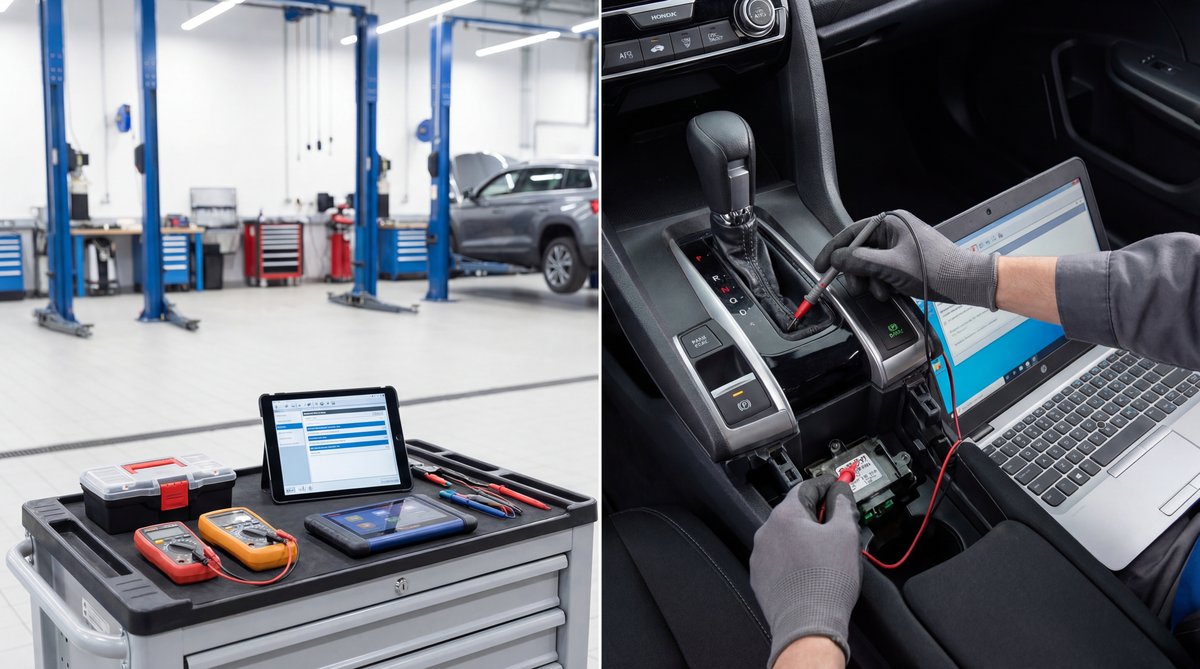
Alright, so here’s our electronic brake switch in the Civic. You can see it’s pretty simple – push it off, pull it on, push it off. Real quick and easy to operate, which is actually good for what we’re about to try. The question is whether Honda programmed any lockouts that would prevent this from working while the car’s moving.
We’re going to take it out to a nice clear spot where there’s nothing to hit and plenty of room to slide around if this actually works. Safety first, guys – you never want to try something like this in a parking lot with other cars around or anywhere near traffic.
⚠️ Warning
Never attempt this on public roads or in areas with other vehicles or pedestrians. This test was performed in a controlled environment with plenty of clear space. Attempting to drift on public roads is illegal and extremely dangerous.
The Drift Attempt
Alright, we got a nice clear spot here. Time to see if this electronic brake will actually let us get sideways. I’m going to get some speed up and then pull that electronic brake switch.
Here we go… wow, that actually worked!
So basically, what happened is when I pulled the electronic emergency brake while moving, the rear brakes engaged just like a traditional handbrake would. The rear wheels locked up, broke traction, and the back end came around. It’s not quite as immediate as yanking a cable-operated handbrake, but it definitely works.
The electronic emergency brake in the Honda Civic will actually engage while driving, allowing you to break rear traction and drift the car.
The thing is, I wasn’t entirely sure this would work. A lot of modern cars with electronic brakes have programming that prevents the parking brake from engaging above certain speeds, or they’ll only apply partial braking force. But Honda apparently decided to let their system work even while moving, which is actually pretty cool.
How Electronic E-Brakes Work
Let me explain real quick what’s happening mechanically when you pull that electronic brake. Instead of a cable running from your handbrake lever back to the rear brakes, there’s an electric motor at each rear brake caliper. When you pull the switch, it sends an electrical signal to those motors, and they push the brake pistons to clamp down on the rotors.
The advantage of this system is that it’s more reliable than cables that can stretch or rust, and it takes up less space in the cabin. The downside? Well, if your battery dies, engaging the parking brake becomes more complicated, and you can’t gradually apply pressure like you can with a manual lever.
🔧 Pro Tip
Most electronic parking brakes will automatically engage when you turn off the ignition and automatically release when you press the gas pedal. This prevents you from accidentally driving away with the parking brake on.
For other Honda electronic system issues, check out our guide on fixing the P2646 VTEC code – another electronic system that can cause problems.
Safety Considerations
Now, before anyone goes out and tries this themselves, we need to talk about safety. Just because you can do something doesn’t always mean you should. This test was done in a completely empty area with no other cars, no pedestrians, and plenty of run-off space if something went wrong.
The thing is, when you lock up the rear brakes like this, you’re putting stress on components that weren’t really designed for this kind of use. The electronic brake motors, the brake pads, the rotors – they’re all designed for parking, not for high-speed braking maneuvers. Doing this repeatedly could cause premature wear or even damage to the system.
❌ Common Mistake
Don’t try to drift on wet or icy roads thinking it’ll be safer because speeds are lower. You’ll have even less control, and the car can spin completely around unpredictably. Stick to dry pavement in controlled environments only.
Also, keep in mind that drifting, even in a parking lot, can be illegal depending on local laws about reckless driving or exhibition of speed. And your insurance definitely won’t cover you if you wreck while intentionally trying to drift your car.
⚠️ Warning
Repeatedly using the electronic parking brake while moving could damage the system and result in expensive repairs. The electronic brake motors can overheat, and brake pads can wear unevenly. This test was for educational purposes only.
Frequently Asked Questions
Will using the electronic parking brake while driving damage my Honda Civic?
Do all cars with electronic parking brakes allow you to engage them while moving?
Is drifting with an electronic parking brake the same as with a manual handbrake?
What should I do if my electronic parking brake stops working?
Can you release the electronic parking brake manually if the battery dies?