
Alright guys, so here’s the thing – Subaru oil changes are usually pretty straightforward. You’ve got your oil filler cap right on top, your dipstick within easy reach, and on a lot of the newer models, that oil filter sits right there on top of the engine. Super easy to get to. But I’ve had more than a few customers come into my shop with some serious problems – transmission not shifting right, oil way overfull – and when I ask what happened, they tell me “I just changed my oil.” So what’s going on here? Well, they drained the wrong fluid. And I’m going to show you exactly how to avoid making that same mistake so you don’t screw up your Subaru oil change.
Why Subaru Oil Changes Confuse People
Look, I get it. You slide under your Subaru, and you see what looks like a nice big drain plug staring right at you. Easy access, right where you’d expect it to be. So you pull it out, drain the fluid, and start adding fresh oil. Then you check your dipstick and realize something’s way off – the oil level is through the roof. Congratulations, you just drained your transmission fluid and overfilled your engine oil.
This happens way more than you’d think. I’ve been an ASE Master Automotive Technician for over 26 years, and I’ve seen this mistake countless times. The thing is, Subarus have multiple drain plugs underneath, and if you’re not paying attention to which one you’re pulling, you’re gonna have a bad day.
❌ Common Mistake
That big, easily accessible drain plug you see first? That’s probably your transmission drain plug, not your engine oil drain plug. Don’t let the easy access fool you into pulling the wrong one.
Identifying the Correct Oil Drain Plug
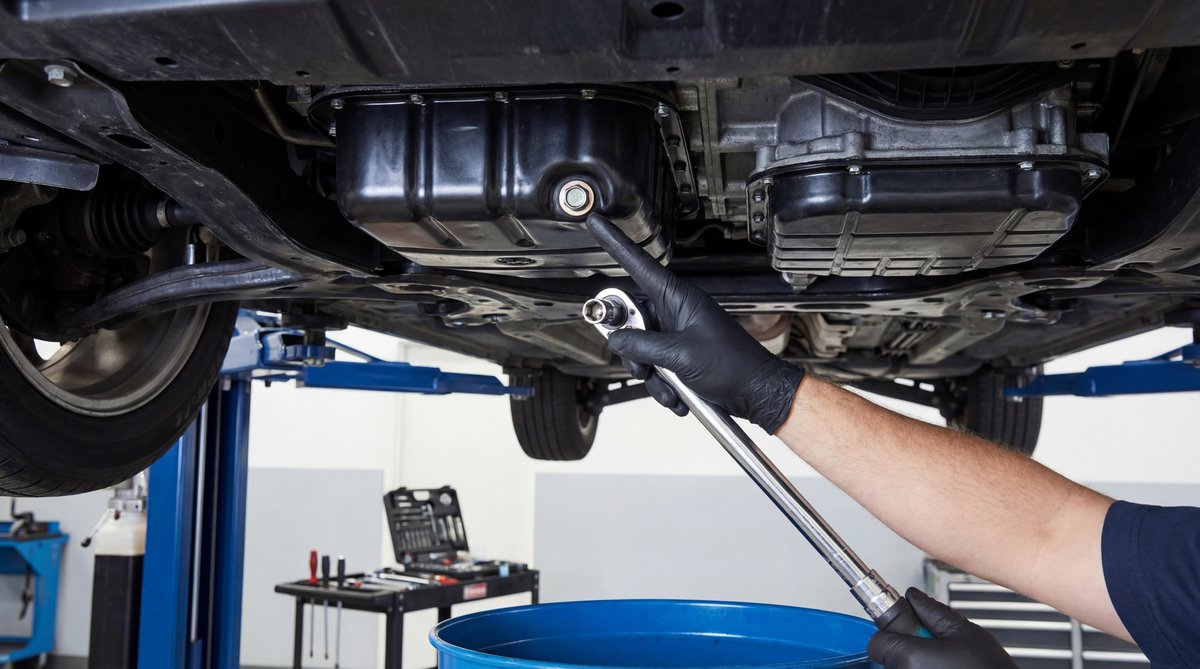
Alright, so we’re under the vehicle getting ready to change the oil. And yeah, look at that – there’s a nice big drain plug right there. But before you just pull that out and start draining, you need to be certain you’re actually at the oil drain plug and not the transmission drain plug.
The engine oil drain plug on most Subarus is going to be on the oil pan, which sits a bit differently than the transmission pan. You want to make sure you’re pulling from the engine oil pan specifically. On many models, the transmission drain plug is actually more accessible and larger, which is why people grab it first.
🔧 Pro Tip
Before you pull any drain plug, take a minute to locate your oil filter. The oil drain plug should be relatively close to where your oil filter sits. If that big drain plug you’re looking at is nowhere near your filter, you’re probably looking at the wrong one.
The oil drain plug typically takes a 14mm or 17mm socket depending on your specific Subaru model. When you remove it, you should see that familiar dark brown or black engine oil coming out. If you pull a plug and see red or pink fluid, stop immediately – that’s transmission fluid, and you’ve pulled the wrong plug.
CVT Transmission Models: Even More Confusing

Now on the newer Subarus with CVT transmissions and differentials, it gets even more confusing because you’ve got multiple drain plugs all in the same general area. You’ve got your oil drain plug, your differential plug, and then your CVT transmission plug all sitting there. Three different plugs, three different fluids, and if you pull the wrong one, you’re in for a world of hurt.
So basically, if you haven’t changed your oil on a Subaru before – especially one of these newer CVT models – you really need to take your time and make absolutely certain you’re pulling the right drain plug. The CVT fluid is expensive stuff, and if you drain it thinking it’s engine oil, you’re looking at a costly mistake.
⚠️ Warning
If you accidentally drain your CVT transmission fluid thinking it’s engine oil, do NOT drive the vehicle. CVT transmissions require very specific fluid and operating levels. Driving without proper fluid will destroy your transmission, which can cost thousands to replace.
Step-by-Step Subaru Oil Change Process
Alright, so let me walk you through the proper way to do this oil change so you don’t end up with transmission problems and overfilled oil.
First thing you’re gonna do is get the vehicle up on jack stands or ramps – make sure it’s secure and safe to work under. Never rely on just a jack alone. Let the engine cool down for a bit if you’ve been driving, because hot oil will burn you.
Once you’re under there, take a good look at what you’re working with. Locate your oil filter first – on most newer Subarus, it’s sitting right on top of the engine, super easy to access. On some models, you might need to get to it from underneath. Either way, find that filter first, then look for the drain plug that’s going to be on the same general component – the engine oil pan.
When you’ve identified the correct oil drain plug – and I mean really made sure it’s the right one – place your drain pan underneath and remove that plug. The oil drain plug usually takes about 25-30 ft-lbs of torque when you’re putting it back in, but we’ll get to that in a minute.
Let the oil drain completely – this usually takes about 5-10 minutes. While that’s draining, you can go ahead and remove your old oil filter. Now here’s the thing – when you take off that filter, you’re gonna want to make sure the old gasket came off with it. I can’t tell you how many times I’ve seen people put a new filter on top of an old gasket that stuck to the engine, and then they’ve got oil leaking everywhere.
When you’re underneath, you just want to be certain that you’re not pulling the transmission drain plug and you’re actually pulling the oil drain plug.
Once the oil is done draining, you’re gonna install a new crush washer on that drain plug. These are single-use, so don’t reuse the old one – they’re like a dollar or two, just get a new one. Thread the drain plug in by hand first to make sure you’re not cross-threading it, then tighten it down to spec with a torque wrench. For most Subarus, that’s around 25-30 ft-lbs, but check your specific model’s manual.
Put some fresh oil on the gasket of your new oil filter, then thread it on. Most filters you’re gonna hand-tighten plus about 3/4 of a turn, or if you’re using a torque wrench, about 10-15 ft-lbs depending on the filter design.
Now comes the critical part – adding the right amount of oil. For most 2.5L Boxer engines like you’d find in an Outback or Forester, you’re looking at about 5.1 quarts with a filter change. The 2.0L turbo engines in something like a WRX take closer to 5.9 quarts. But don’t just dump it all in at once. Add about 4.5 quarts first, then check your dipstick and add slowly from there until you hit the full mark.
Tools and Parts You’ll Need
🔧 Tools Needed
- Socket set (14mm or 17mm for drain plug)
- Oil filter wrench (cap or strap type)
- Torque wrench (essential for proper tightening)
- Oil drain pan (at least 6 quart capacity)
- Funnel for adding oil
- Jack and jack stands or ramps
- Gloves and eye protection
For parts, you’re gonna need the right oil and filter. Subaru recommends full synthetic oil for most modern models – usually 0W-20 or 5W-30 depending on your specific engine. Don’t cheap out on the oil here, guys. You want synthetic that meets API SN Plus or newer specifications.
For the oil filter, I always recommend going with an OEM Subaru filter. Yeah, you can save a few bucks with an aftermarket one, but the OEM filters are designed specifically for your engine and I’ve seen too many problems with cheap filters. You’re looking at about $10-20 for an OEM filter like part number 15208AA15A for many models.
And don’t forget that crush washer for the drain plug – it’s a dollar or two, and it ensures you won’t have leaks. Always replace it every oil change.
| DIY Cost | Shop Cost | You Save |
|---|---|---|
| $40-$70 | $80-$150 | $40-$80 |
💰 Money Saver
Doing your own oil changes saves you $40-80 per change compared to shop rates. If you change your oil every 6,000 miles like Subaru recommends, that’s $80-160 saved per year on a vehicle with average annual mileage.
Common Mistakes That Cost You Money
Alright, so let’s talk about what not to do. The biggest mistake – and the whole reason I made this video – is pulling the wrong drain plug. You drain your transmission fluid thinking it’s oil, then you add 5 quarts of engine oil on top of the oil that’s already in there. Now your engine oil is way overfull, and your transmission has no fluid. Both of those are big problems.
Overfilled engine oil causes all kinds of issues. The crankshaft starts hitting the oil, which creates foam. That foam doesn’t lubricate properly, and you can actually damage your engine. Plus, the excess pressure can blow out seals and gaskets. And if you drained your transmission fluid? Well, you might not realize it until you start driving and notice the transmission slipping or not shifting right. By then, you might have already damaged it.
Another mistake I see all the time is people not replacing that crush washer. They just put the old one back on, and then they’ve got oil dripping from the drain plug. That washer is designed to crush and create a seal – once it’s been used, it doesn’t seal properly anymore.
⚠️ Warning
If you notice your engine oil is overfull after an oil change, or your transmission isn’t shifting properly, stop driving immediately. Check to make sure you drained engine oil and not transmission fluid. If you made this mistake, you’ll need to drain the excess oil from the engine and refill your transmission with the correct fluid before driving.
Cross-threading the drain plug is another expensive mistake. Always thread the plug in by hand first to make sure it’s going in straight. If you force it with a wrench and strip those threads in the oil pan, you’re looking at a much bigger repair – possibly a whole new oil pan or a thread repair kit.
And real quick – don’t overtighten that drain plug. Use a torque wrench and tighten it to spec. Over-tightening can strip the threads or crack the oil pan on some models. Under-tightening means it might come loose and you’ll dump all your oil on the highway. Neither situation is good.
One more thing – if your Subaru has an oil change reminder light, make sure you reset it after the oil change. The procedure varies by model, but it usually involves a button sequence on the dash. If you don’t reset it and you’re troubleshooting other issues later, you might end up confused about when the oil was actually changed. Plus, if you ever need to look at warranty issues or you’re dealing with a check engine light situation, having accurate service records matters.
Frequently Asked Questions
What are the most common mistakes people make when changing the oil in a Subaru?
How can I ensure I’m using the correct oil drain plug for my Subaru?
What safety equipment is essential for changing the oil in a Subaru?
Are there any specific tools that are recommended for changing the oil in a Subaru?
How often should I change the oil in a Subaru to avoid costly repairs?
🔧 Final Thoughts
Look, changing your oil on a Subaru is pretty straightforward once you know which drain plug to pull. Just take your time, double-check everything before you start draining fluid, and use the right parts and torque specs. The few minutes you spend making sure you’re doing it right will save you from a very expensive mistake. And if you’re ever unsure about which plug is which, there’s no shame in consulting your owner’s manual or asking someone who’s done it before. Trust me, that’s way better than having to explain to your transmission why it doesn’t have any fluid in it.